

Places to Visit in Romania
From medieval towns and painted monasteries to mountain trails, the Black Sea and the Danube Delta, find ideas for your next journey through Romania.
New places to explore
Ten more ideas for your Romanian journey, from fortified villages and specialist museums to castle events and seasonal nature.
Choose a region
Browse the regions below, then open a county to see its places to visit. English names are accompanied by Romanian names where helpful for maps and signs. Regional groupings are designed for trip planning; some landscapes and routes cross county boundaries.
Bucharest & nearby
Begin with the capital, then explore lakes, monasteries and the Danube south of the city.
Bucharest16 places & ideas

Photo: seisdeagosto · CC BY-SA 2.0 · Cropped for display Bucharest
BucureștiRomania’s capital brings together grand boulevards, small historic churches, major museums and busy neighbourhoods. Use Bucharest as a city break in its own right, with time for the Old Town, Calea Victoriei and the parks beyond the centre.
Highlights: Architecture, museums and city walks
Read the visitor guide →
Photo: Tiia Monto · CC BY-SA 4.0 · Cropped for display Bucharest Old Town
Centrul VechiExplore the lanes around Lipscani for historic buildings, cafés and a lively evening scene. The Old Town is a useful starting point for a central walking route, with Stavropoleos Church and Calea Victoriei close by.
Highlights: Historic streets, cafés and nightlife
Read the visitor guide →
Photo: Mihai Petre · CC BY-SA 3.0 · Cropped for display Palace of Parliament
Palatul ParlamentuluiThe enormous Palace of Parliament is a defining landmark of Bucharest’s communist-era transformation. Its scale is striking from outside; visitors interested in the interiors should check the official tour arrangements and entry requirements before setting out.
Highlights: Architecture and communist-era history
Read the visitor guide →
Photo: Diego Delso · CC BY-SA 4.0 · Cropped for display Romanian Athenaeum
Ateneul RomânLook for the domed concert hall near Revolution Square, home to the George Enescu Philharmonic. Its columned façade makes a memorable stop on a city walk; check the orchestra’s programme or visitor arrangements if you want to experience the interior.
Highlights: Concerts and landmark architecture
Read the visitor guide →
Photo: Pudelek (Marcin Szala) · CC BY-SA 3.0 · Cropped for display Dimitrie Gusti National Village Museum
Muzeul Național al Satului Dimitrie GustiThis open-air museum introduces rural Romania through traditional houses and other buildings brought together from different regions. Explore the paths between the homesteads for a closer look at local craftsmanship, building materials and village life.
Highlights: Traditional houses and rural heritage
Read the visitor guide →
Photo: Neoclassicism Enthusiast · CC BY-SA 4.0 · Cropped for display National Museum of Art of Romania
Muzeul Național de Artă al RomânieiSet in the former Royal Palace on Revolution Square, this museum brings together Romanian and European art. It is a natural addition to a cultural itinerary along Calea Victoriei, particularly if you want to spend part of your visit indoors.
Highlights: Romanian art and the former Royal Palace
Read the visitor guide →
Photo: Pudelek (Marcin Szala) · CC BY-SA 3.0 · Cropped for display Grigore Antipa Natural History Museum
Muzeul Grigore AntipaDiscover natural history at one of Bucharest’s best-known museums, near Piața Victoriei. The museum takes its name from scientist Grigore Antipa and offers an indoor cultural stop that can be combined with the nearby Romanian Peasant Museum.
Highlights: Natural history and museum collections
Read the visitor guide →
Photo: Dimitris Kamaras from Athens, Greece · CC BY 2.0 · Cropped for display Ceaușescu House
Palatul PrimăveriiThe former residence of Nicolae and Elena Ceaușescu offers a view of the private surroundings of Romania’s communist leadership. Visit for the contrast between the family’s domestic setting and the wider history of the period; check the museum’s booking arrangements directly.
Highlights: Modern history and the former presidential residence
Read the visitor guide →
Photo: Joe Mabel · CC BY-SA 3.0 · Cropped for display Stavropoleos Church
Biserica StavropoleosA small monastery church in the Old Town, Stavropoleos is known for its Brâncovenesc architecture and carved details. Pause here during a walk around Lipscani for a quieter setting among the busy streets, respecting worshippers and any services taking place.
Highlights: Church architecture and carved stonework
Read the visitor guide →
Photo: Mathieu Chollet – MChollet · CC BY-SA 4.0 · Cropped for display Calea Victoriei
Follow this central avenue past some of Bucharest’s most recognisable historic buildings and cultural landmarks. Plan a leisurely walk with stops around Revolution Square and the former Royal Palace, rather than treating it simply as a route between attractions.
Highlights: Boulevard walks and historic architecture
Read the visitor guide →
Photo: I, Mastermindsro · CC BY-SA 3.0 · Cropped for display Cișmigiu Gardens
Grădina CișmigiuTake a break from city sightseeing in these central gardens, laid out around an artificial lake. Shaded paths and planted areas make Cișmigiu a pleasant place for a slower walk, with easy access from the streets around Elisabeta Boulevard.
Highlights: Garden paths and a central lake
Read the visitor guide →
Photo: Diego Delso · CC BY-SA 4.0 · Cropped for display King Michael I Park
Parcul Regele Mihai I / HerăstrăuAlso widely known as Herăstrău Park, this green space surrounds a lake in northern Bucharest. Combine a waterside walk with the neighbouring Village Museum, or leave time here for a relaxed change of pace from the historic centre.
Highlights: Lakeside walks and green space
Read the visitor guide →
Photo: Tiia Monto · CC BY-SA 4.0 · Cropped for display Văcărești Nature Park
Parcul Natural VăcăreștiDiscover a different side of Bucharest in the wetlands around Lake Văcărești. This urban nature park is a destination for observing wildlife and exploring a landscape within the city; follow designated access routes and keep your distance from birds and other animals.
Highlights: Urban wetlands and wildlife observation
Read the visitor guide →
Photo: Bekuletz · CC BY-SA 2.5 · Cropped for display Cotroceni Neighbourhood and National Museum
Cotroceni și Muzeul Național CotroceniExplore Cotroceni for a quieter neighbourhood walk and its palace museum. The museum adds royal and presidential history to a visit to this part of Bucharest; consult its official visitor information before planning an interior tour.
Highlights: Neighbourhood streets and palace history
Read the visitor guide →
Photo: Yair-haklai · CC BY-SA 4.0 · Cropped for display National Museum of Romanian History
Muzeul Național de Istorie a RomânieiHoused on Calea Victoriei, the national history museum explores Romania’s past through archaeological and historical collections. Include it in an Old Town itinerary, and check the museum’s current exhibitions and accessible galleries before your visit.
Highlights: Archaeology and Romanian history
Read the visitor guide →
Photo: Britchi V.I.Iulia · CC BY-SA 4.0 · Cropped for display National Museum of the Romanian Peasant
Muzeul Național al Țăranului RomânExplore Romanian rural culture through textiles, traditional clothing, ceramics and other objects of everyday life. This museum near Piața Victoriei complements the Village Museum: one introduces the objects and customs, while the other focuses on traditional buildings and homesteads.
Highlights: Traditional textiles, pottery and rural culture
Read the visitor guide →
Ilfov County7 places & ideas

Photo: fusion-of-horizons · Wikimedia Commons · CC BY 2.0 Mogoșoaia Palace
A historic lakeside ensemble of Brâncovenesc architecture, museum interiors, gardens and the Church of Saint George.
Read the travel guide →
Photo: fusion-of-horizons, changes by Rabanus Flavus · Wikimedia Commons · CC BY 2.0 Snagov Monastery
A medieval island monastery north of Bucharest, with a church rebuilt by Neagoe Basarab, links to Antim Ivireanul’s printing press and a Vlad Țepeș burial tradition best treated as legend.
Read the travel guide →
Photo: Thomas Stellmach · Wikimedia Commons · CC BY-SA 2.0 Lake Snagov
A wooded lakeside landscape north of Bucharest, with seasonal water lilies, protected habitats, village viewpoints and boat excursions that should be booked and verified in advance.
Read the travel guide →
Photo: Andrei Stroe · Wikimedia Commons · CC BY-SA 3.0 Romania Cernica Monastery
A historic monastery across the islands of Lake Cernica, with churches and a cloistered community shaped by Saint Gheorghe and Saint Calinic.
Read the travel guide →
Photo: MAVone · Wikimedia Commons · CC BY 3.0 Cernica Lake and Forest
A protected landscape east of Bucharest, where lake, wetland and oak woodland support wildlife and offer a quiet day outdoors when access is confirmed.
Read the travel guide →
Photo: Daniele Napolitano · Wikimedia Commons · CC BY-SA 4.0 Therme Bucharest
A large indoor-outdoor wellness and water complex near the airport, with family slides, thermal pools, tropical relaxation areas and saunas.
Read the travel guide →
Photo: Biruitorul · Wikimedia Commons · CC0 1.0 Știrbey Palace, Buftea
A romantic nineteenth-century palace, family chapel, landscaped park and historic water tower near Bucharest. Visitor access depends on current estate arrangements, so confirm before travelling.
Read the travel guide →
Giurgiu County6 places & ideas

Giurgiu Port Captaincy on the Danube. Photograph by Mmoru, Wikimedia Commons source, licensed CC BY-SA 3.0. · Cropped for display 
The former Prefecture building, now the Teohari Antonescu County Museum. Photograph by Stancosty, Wikimedia Commons source, licensed CC BY-SA 3.0 Romania. · Cropped for display 
Reed beds with Comana Forest beyond the Neajlov wetlands. Photo: Dahn · Wikimedia Commons · CC0. · Cropped for display 
Church within the enclosure of Comana Monastery. Photo: Bogdantod · Wikimedia Commons · CC BY-SA 3.0. · Cropped for display 
Aventura Park Comana during an event in September 2013. Photograph by Alexandru Panoiu, Wikimedia Commons / Flickr source, licensed CC BY 2.0. · Cropped for display 
Udriște Năsturel Manor. Photograph by Miehs · Wikimedia Commons · CC BY-SA 3.0 Romania. · Cropped for display
Transylvania
Discover medieval towns, fortified churches, castles and mountain landscapes.
Alba County15 places & ideas

Photo: David Stanley from Nanaimo, Canada · Wikimedia Commons · CC BY 2.0. Alba Iulia and Alba Carolina Citadel
Alba Iulia brings several chapters of Romanian history into one walkable setting. Explore the gates and landscaped moats of Alba Carolina, then slow down for its two contrasting cathedrals and the museums that explain the city’s national significance.
Read the travel guide →
Photo: Daniel Tellman · Wikimedia Commons · CC BY 2.0 Saint Michael’s Cathedral, Alba Iulia
Step inside Alba Iulia’s Roman Catholic cathedral to explore medieval architecture and the tombs of figures who shaped Transylvania. Combine this quiet cultural visit with the neighbouring Coronation Cathedral and the wider Alba Carolina Citadel.
Read the travel guide →
Photo: MihaelaRoler · Wikimedia Commons · CC BY-SA 3.0 ro. Câlnic Fortified Church and Citadel
Câlnic offers a smaller, quieter encounter with Transylvania’s fortified heritage. Explore the citadel’s enclosed spaces and understand its relationship with the village and the Evangelical church on the hill, rather than treating every historic building as one attraction.
Read the travel guide →
Photo: Andrea Polereczky · Wikimedia Commons · CC BY-SA 3.0. Rimetea Village
Rimetea sits beneath the limestone profile of Piatra Secuiului, with a village setting that rewards a slow stay. Come for the relationship between houses, fields and mountain scenery; choose a hike only when the route and conditions suit your experience.
Read the travel guide →
Photo: Gheorghescudumitru · Wikimedia Commons · CC BY-SA 4.0. Colțești Fortress
Colțești Fortress rises above the village as a striking group of exposed stone ruins. Its appeal is the walk, the surviving walls and the view across the surrounding landscape; plan it as an outdoor excursion with a return descent, rather than a drive-up castle interior.
Read the travel guide →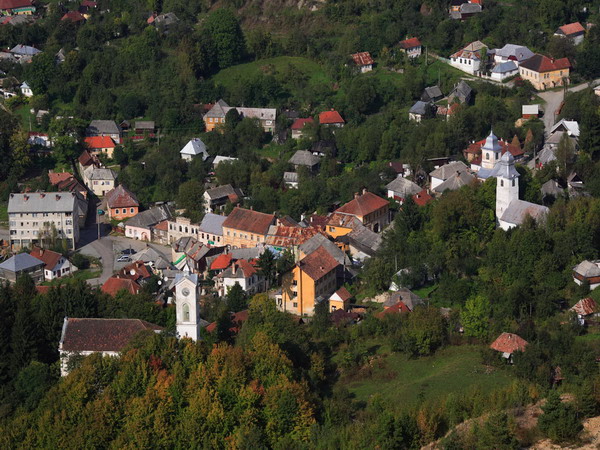
Photo: Daniel Tara (eredeti feltöltő) · Wikimedia Commons · Public domain. Roșia Montană Mining Landscape
Roșia Montană is a landscape shaped by gold mining, with Roman workings, later industrial heritage and a living village. A thoughtful visit combines the Mining Museum with time above ground, allowing the history and community to explain more than a single underground attraction.
Read the travel guide →
Photo: Beradrian at the English-language Wikipedia · Wikimedia Commons · CC BY-SA 3.0 Scărișoara Ice Cave
Descend beneath the forests of the Apuseni Mountains to discover Scărișoara’s underground ice. Plan the cave visit carefully, then leave time for the villages and mountain scenery around Gârda de Sus.
Read the travel guide →
Photo: Rheaxnaidoo · Wikimedia Commons · CC BY-SA 3.0 Râmeț Gorge
Discover the wooded valley and limestone walls of Cheile Râmețului. Choose a visit that matches your experience: enjoying the approach valley and completing a route through the gorge are very different outings.
Read the travel guide →
Photo: Ciocan Constantin-Solonț · Wikimedia Commons · CC BY-SA 4.0 Râmeț Monastery
Visit a living Orthodox monastery beneath the limestone hills of the Râmeț valley. Its historic church and mountain setting make a rewarding cultural stop, whether you are exploring Alba County or planning a gentle day outdoors.
Read the travel guide →
Photo: Țetcu Mircea Rareș · Wikimedia Commons · CC BY-SA 3.0 Râpa Roșie Natural Reserve
See red earth shaped into steep columns and ridges at Râpa Roșie, a protected landscape near Sebeș. This is a rewarding outdoor stop for travellers who enjoy unusual scenery, photography and a slower route through southern Alba County.
Read the travel guide →
Photo: Roamata · Wikimedia Commons · Public domain Aiud and Its Citadel
Discover Aiud’s compact fortified heart, where churches and guild towers tell the story of a Transylvanian town. It makes a rewarding stop between Alba Iulia and the Trascău countryside, with enough history to justify a slower visit.
Read the travel guide →
Photo: Kvmgz · Wikimedia Commons · CC BY-SA 4.0 Bethlen-Haller Castle
Combine a Transylvanian castle visit with the wine landscape around Cetatea de Baltă. Bethlen-Haller is operated by Jidvei and offers bookable experiences, making advance planning more useful than arriving with an assumed open-door schedule.
Read the travel guide →
Photo: Damien Boilley from suburbs of Paris, France · Wikimedia Commons · CC BY 2.0 Arieșeni and Gârda de Sus
Use Arieșeni and Gârda de Sus as bases for caves, village scenery and carefully chosen walks in the Apuseni Mountains. A few nights here give you more freedom than a hurried day trip, especially when weather and visitor access shape the programme.
Read the travel guide →
Photo: Nicu Farcaș · Wikimedia Commons · CC BY-SA 4.0 Poarta lui Ionele Cave
Poarta lui Ionele offers a dramatic limestone entrance and a manageable cave visit near Gârda de Sus. Combine it with the Ordâncușa valley for an unhurried Apuseni outing, leaving enough time to follow the visitor route and understand why the underground environment needs protection.
Read the travel guide →
Sâncrai Castle in an archive photograph from June 2014. Photo: Țetcu Mircea Rareș / CC BY-SA 4.0 (via Wikimedia Commons). Cropped for directory display. Sâncrai Castle
Discover Sâncrai Castle near Aiud and understand its event-only access policy before planning a cultural visit in Alba County.
Read the visitor guide →
Brașov County20 places & ideas

Photo: Andrei Dan Suciu · Wikimedia Commons · CC BY 3.0 Brașov
Brașov brings together a walkable historic centre and the wooded slopes of Tâmpa. Start with the cafés and pastel façades around Piața Sfatului, then explore the Black Church, old gates and streets leading into Șchei. Give the city two nights if you want an unhurried visit and time for a mountain outing or a castle day trip.
Read the travel guide →
Photo: Cosmin Stefanescu · Wikimedia Commons · CC BY-SA 3.0 ro Black Church
Step inside Brașov’s landmark Gothic church for historic textiles, carved details and the musical heritage of its Lutheran community. The Black Church is an essential cultural stop just beside the old town’s main square.
Read the travel guide →
Photo: AndreiNicusan · Wikimedia Commons · CC BY 3.0 Tâmpa Mountain
Rise above Brașov’s red rooftops on its forested city mountain. Tâmpa offers a nature-focused break close to the historic centre, but your route and viewing position should reflect current access restrictions and weather.
Read the travel guide →
Photo: Whitepixels · Wikimedia Commons · CC0 Poiana Brașov Mountain Resort
Plan a mountain stay above Brașov, with winter sports on Postăvaru and a different pace in the warmer months. Poiana Brașov can work as a resort holiday or a day trip connected with the historic city.
Read the travel guide →
Bran Castle rising above the village and wooded hillside in Romania. Photo: Photo: Myrabella / Wikimedia Commons · Wikimedia Commons · CC BY-SA 3.0. Bran Castle
A hilltop fortress, a royal retreat and Romania’s best-known literary castle: Bran rewards a visit that looks beyond the Dracula souvenir stalls. Plan time for its rooms, courtyard and setting, then explore the villages around it.
Read the travel guide →
Photo: Neighbor’s goat · Wikimedia Commons · CC BY-SA 3.0 ro Râșnov and Its Fortress
A wooded hill and a fortified Saxon settlement give Râșnov its distinctive skyline. Plan a visit around the town and the accessible fortress garden: the fortress interior is closed for restoration.
Read the travel guide →
Dinosaur exhibit at Dino Parc Râșnov. Photo via PxHere, published as CC0 public domain. · Cropped for display Dino Parc Râșnov
Read the visitor guide →
Photo: Flominator · Wikimedia Commons · CC BY-SA 4.0 Libearty Bear Sanctuary
Visit a forest sanctuary where rescued bears have space to retreat. Libearty is a guided conservation visit with firm age and booking rules, so arrange your place before travelling.
Read the travel guide →
Photo: Becheru Dogaru Dan · Wikimedia Commons · CC BY-SA 3.0 ro Făgăraș Fortress
A broad moat surrounds one of Transylvania’s most striking fortified complexes. Visit Făgăraș for its architecture and regional museum, allowing time for the site’s difficult twentieth-century history as well as its earlier princely past.
Read the travel guide →
Photo: Myrabella · Wikimedia Commons · CC BY-SA 3.0 Prejmer Fortified Church
Walk into a defensive courtyard lined with rooms that once sheltered a community. Prejmer is one of the clearest places to understand how a Transylvanian village church became a refuge as well as a place of worship.
Read the travel guide →
Photo: Pasztilla aka Attila Terbócs · Wikimedia Commons · CC BY-SA 4.0 Hărman Fortified Church
Behind Hărman’s pale defensive walls, a church, painted chapel and community chambers reveal several layers of Saxon history. This is an absorbing half-day cultural stop within easy reach of Brașov.
Read the travel guide →
Photo: · Wikimedia Commons · Public domain Viscri Village and Fortified Church
Viscri combines a UNESCO-listed fortified church with the streets and farmsteads of a living village. Visit slowly, and plan around current restoration: the church interior and main tower are closed, while selected heritage spaces remain open.
Read the travel guide →
Photo: Florin Şarpe · Wikimedia Commons · CC BY-SA 4.0 Rupea Fortress
Rupea’s fortress rises above the town on a basalt hill, with successive defensive enclosures following the slope. Stop for a walk through the fortifications and broad views across the surrounding Transylvanian countryside.
Read the travel guide →
Photo: Vlad.saileanu at Romanian Wikipedia · Wikimedia Commons · Public domain Moieciu and Fundata Villages
Between the Bucegi and Piatra Craiului ranges, Moieciu and Fundata offer scattered villages, hay meadows and rural guesthouses. Choose a specific village and a realistic walking plan to enjoy the landscape beyond a quick drive through.
Read the travel guide →
Photo: Petr Vodička · Wikimedia Commons · CC BY-SA 4.0 Zărnești Gorge
Prăpăstiile Zărneștiului is a dramatic limestone gorge on the Zărnești side of Piatra Craiului National Park. A measured out-and-back walk offers a way to appreciate the cliffs without committing to a high mountain route.
Read the travel guide →
Photo: Strainu · Wikimedia Commons · CC BY-SA 4.0 Șinca Veche Cave Church
Rock-cut worship spaces beneath Pleșu Hill make Șinca Veche an unusual cultural stop in the Făgăraș region. Visit for the carved architecture and monastic setting, treating the many stories about the site as local traditions rather than established historical facts.
Read the travel guide →
Photo: Original uploader was Nicu Farcas at ro.wikipedia · Wikimedia Commons · Public domain Seven Ladders Canyon
Seven Ladders Canyon, or Canionul Șapte Scări, combines a forest approach with a climb through a narrow limestone gorge in the Piatra Mare Mountains near Brașov. Plan it as an outdoor outing with operating hours and weather checks, rather than a roadside waterfall stop.
Read the travel guide →
Photo: El bes · Wikimedia Commons · CC BY 3.0 Măgura and Peștera Villages
Măgura and Peștera offer scattered homes, pasture slopes and mountain views on the eastern side of Piatra Craiului. Visit for village walks and a slower rural stay, keeping demanding mountain routes separate from an easy day among the meadows.
Read the travel guide →
An archive view of Cincșor’s fortified church, photographed in July 2008. Photo: vutu / CC BY 2.0 (via Wikimedia Commons). Cropped for directory display. Cincșor
Explore Cincșor’s medieval fortified church and restored Saxon buildings, with advice on arranging a visit and combining it with Făgăraș.
Read the visitor guide →
The fortified church ensemble at Meșendorf, photographed in August 2019. Photo: Țetcu Mircea Rareș / CC BY-SA 4.0 (via Wikimedia Commons). Cropped for directory display. Meșendorf
Plan a visit to Meșendorf in Brașov County, with its medieval fortified church, village streets and links to nearby Saxon settlements.
Read the visitor guide →
Cluj County14 places & ideas

Photo: Dennis G. Jarvis · Wikimedia Commons · CC BY-SA 2.0 Cluj-Napoca
Cluj-Napoca is a useful choice for a city break with historic streets, cafés and green spaces, or as the starting point for a longer trip through northwestern Romania. Begin around Piața Unirii, then make room for the Botanical Garden and a museum or park. Two full days give you a more satisfying visit than a rushed stop between flights and onward travel.
Read the travel guide →
Photo: David Stanley from Nanaimo, Canada · Wikimedia Commons · CC BY 2.0 Union Square and Saint Michael’s Church, Cluj
Begin your Cluj-Napoca visit in Piața Unirii, where Gothic architecture, the Matthias Corvinus monument and the surrounding streets introduce the city’s historic centre.
Read the travel guide →
Photo: Ana Maria Catalina · Wikimedia Commons · CC BY-SA 3.0 Alexandru Borza Botanical Garden
Make time for Cluj-Napoca’s university botanical garden, where outdoor plant collections, the Japanese and Roman gardens, and greenhouse displays offer a change of pace from the historic centre.
Read the travel guide →
Photo: Marcmiquel · Wikimedia Commons · CC BY-SA 4.0 Romulus Vuia Ethnographic Park
Explore rural architecture and working traditions at Cluj-Napoca’s open-air ethnographic museum. Historic households, craft installations and wooden churches make this a rewarding contrast to the city centre.
Read the travel guide →
Illuminated circular platforms beside the underground lake in Turda Salt Mine. Photo: DimiTalen · Wikimedia Commons · CC0. Turda Salt Mine
Salina Turda combines the scale of a former salt mine with an unusual underground visitor experience. Its deep chambers and lake are the main attraction; rides are optional additions rather than the reason to rush through the mine.
Read the travel guide →
Photo: Cristian Bortes · Wikimedia Commons · CC BY 2.0 Turda Gorge
Follow the Hășdate valley into one of the best-known limestone landscapes around Turda. Choose a walk suited to conditions and your experience, with time to appreciate the cliffs rather than rushing through the gorge.
Read the travel guide →
Photo: Krzysztof Ziarnek, Kenraiz · Wikimedia Commons · CC BY-SA 4.0 Tureni Gorge
Explore the setting of Cheile Turenilor, also called Cheile Turului, between Tureni and Copăceni. Decide in advance whether your visit is a landscape stop or a properly prepared journey through the equipped gorge route.
Read the travel guide →
Photo: Eliza Palos · Wikimedia Commons · CC BY-SA 4.0 Bánffy Castle, Bonțida
Visit the Bánffy estate at Bonțida to see a historic architectural ensemble being brought back into cultural use. Courtyards, exhibitions and the visible restoration story make this an engaging excursion from Cluj.
Read the travel guide →
Photo: Richard Gould from Toronto, Canada · Wikimedia Commons · CC BY-SA 2.0 Gherla
Discover a quieter Transylvanian town whose Armenian heritage is visible in its central cathedral and museum collections. Gherla works well as a focused cultural excursion or a stop on a wider Someș valley itinerary.
Read the travel guide →
Photo: Iulian Hopulele, Cluj-Napoca · Wikimedia Commons · CC BY 2.5 Sic Village and Dance Museum
Visit Sic, also known by its Hungarian name Szék, for an introduction to village architecture and dance traditions. Arrange the museum visit in advance, then leave time for a quiet walk and a separately planned reedbed excursion.
Read the travel guide →
Photo: Utilizator:Țetcu Mircea Rareș at ro.wikipedia · Wikimedia Commons · CC BY-SA 3.0 Tarnița Lake
Plan a lakeside excursion west of Cluj-Napoca around a confirmed access point, a suitable walk or an organised water activity. Tarnița is a reservoir with important infrastructure and water-supply functions as well as scenic appeal.
Read the travel guide →
Photo: Nicu Farcaș · Wikimedia Commons · CC BY-SA 4.0 Beliș-Fântânele Lake
Discover the forested shores and mountain setting of Beliș-Fântânele, a reservoir in western Cluj County. Choose a confirmed shore stop or rural base and leave time for the journeys between villages, viewpoints and outdoor activities.
Read the travel guide →
Photo: Utilizator:Țetcu Mircea Rareș at ro.wikipedia · Wikimedia Commons · CC BY-SA 3.0 Bride’s Veil Waterfall
Visit Vălul Miresei for a forest-valley walk and a waterfall that spreads over dark rock in a white fan. Plan the approach from Răchițele around current road and trail conditions, with enough time to enjoy the setting rather than rush a photograph.
Read the travel guide →
Photo: Ioan Pan · Wikimedia Commons · CC BY-SA 4.0 Bologa Fortress
Explore the remains of a medieval Transylvanian stronghold above Bologa, then place its towers and walls in the wider valley landscape. Confirm visitor access before travelling and combine the monument with an unhurried village stop.
Read the travel guide →
Covasna County10 places & ideas

Photo: Andrei Stroe · Wikimedia Commons · CC BY-SA 3.0 ro Sfântu Gheorghe
Explore the Covasna county city of Sfântu Gheorghe, also known as Sepsiszentgyörgy, through its civic architecture, museums and fortified church. This is the Transylvanian city, distinct from the village of the same name in the Danube Delta.
Read the travel guide →
Photo: Andreea.anghel · Wikimedia Commons · CC BY-SA 4.0 Szekler National Museum
Visit the Székely National Museum in Sfântu Gheorghe for a closer look at regional identity, the institution’s founders and the history of Háromszék. Make time for its distinctive building and garden as well as the exhibition rooms.
Read the travel guide →
Photo: Sebinou~commonswiki · Wikimedia Commons · CC BY 2.5 Târgu Secuiesc
Discover Târgu Secuiesc, also known as Kézdivásárhely, through the narrow courtyards branching away from its former market square. A museum visit and a slow walk make a rewarding cultural stop in Covasna.
Read the travel guide →
Photo: Bogdan Muraru · Wikimedia Commons · CC BY-SA 4.0 Covasna Spa Town
Plan a relaxed stay in Covasna, a town whose identity is closely linked to mineral waters and natural gas emissions. Combine its central sights with a carefully chosen walk, keeping leisure visits separate from medically supervised treatments.
Read the travel guide →
Photo: jeffwarder · Wikimedia Commons · CC BY-SA 3.0 Balvanyos Mountain Resort
Explore the wooded Ciomad–Balvanyos landscape with a carefully planned mountain stay. Fortress ruins, forest routes and the area’s post-volcanic features offer different experiences, each with its own access and safety conditions.
Read the travel guide →
Photo: MARIUS PASCU · Wikimedia Commons · CC BY 3.0 Vârghiș Gorge
Follow the Vârghiș stream through a limestone gorge on the Covasna–Harghita border. Plan this as a walking day with current route advice, and treat cave visits as separate activities requiring permission and suitable equipment.
Read the travel guide →
Kálnoky Castle, home of the Museum of Transylvanian Life, Micloșoara. Photograph supplied through the National Heritage Institute’s Romanian Museums and Collections database; CC BY-SA 4.0. Source and licence details. · Cropped for display 
Photo: IoannesCorvinus · Wikimedia Commons · CC BY-SA 4.0 Daniel Castle, Tălișoara
Discover a restored noble residence in Tălișoara, also known as Olasztelek, near Baraolt. Daniel Castle combines historic architecture with a working hotel estate; arrange your visit around the exhibition, a booked viewing or an overnight stay.
Read the travel guide →
Photo: Fmvh · Wikimedia Commons · CC BY-SA 3.0 Zăbala Village
Explore the Mikes family estate in Zăbala, known in Hungarian as Zabola. Its historic buildings and landscaped park offer a quieter side of Covasna, with day visits arranged in advance and accommodation spread across several estate houses.
Read the travel guide →
Photo: Jan Pešula · Wikimedia Commons · CC0 Comandău
Discover Comandău, a high mountain settlement in Covasna County whose forestry past remains visible in its railway landscape. Come for a slower village stay and carefully planned walks, with current advice on roads and mountain routes.
Read the travel guide →
Harghita County15 places & ideas

Photo: Andrei Stroe · Wikimedia Commons · CC BY-SA 3.0 Miercurea Ciuc
Explore Harghita’s compact county seat through its historic centre, the Mikó Castle museum and the Franciscan pilgrimage site at Șumuleu Ciuc. This guide helps you connect the main sights into an easy city break.
Read the travel guide →
Photo: Andrei Stroe · Wikimedia Commons · CC BY-SA 3.0 Mikó Castle
Visit Mikó Castle in Miercurea Ciuc for a close look at the city’s Renaissance fortress and the Szekler Museum of Ciuc. This guide helps you plan the museum visit, understand the site and combine it with a walk through the town.
Read the travel guide →
Photo: Nicu Farcaș · Wikimedia Commons · CC BY-SA 4.0 Șumuleu Ciuc Pilgrimage Site
Plan a respectful visit to Șumuleu Ciuc, a major spiritual and cultural landmark above Miercurea Ciuc. The neighbourhood brings together the Franciscan church and monastery, a centuries-old Pentecost pilgrimage and a historic hillside chapel route.
Read the travel guide →
Photo: Nicu Farcaș · Wikimedia Commons · CC BY 3.0 Odorheiu Secuiesc
Plan a relaxed visit to Odorheiu Secuiesc, a compact Szekler town in the Târnava Mare valley. This practical guide connects the historic centre, the Székely Támadt fortress remains, the Haáz Rezső Museum and an optional excursion to Szejke.
Read the travel guide →
Photo: Várkonyi Tibor · Wikimedia Commons · CC BY-SA 4.0 Saint Anne Lake
Plan a nature-focused day at Lake Saint Anne (Lacul Sfânta Ana), a lake set inside the Ciomadul volcanic crater in Harghita. This guide explains the visitor system, the linked Mohoș peat bog, access and a practical low-impact itinerary.
Read the travel guide →
Photo: RodicaB · Wikimedia Commons · CC BY-SA 4.0 Mohoș Peat Bog
Explore Mohoș Peat Bog (Tinovul Mohoș), a high-altitude wetland beside Lake Saint Anne in Harghita. This guide explains the sensitive habitat, the supervised boardwalk visit, combined ticket arrangements and how to plan a low-impact day in the Ciomadul volcanic area.
Read the travel guide →
Photo: CallistoJ · Wikimedia Commons · CC BY-SA 4.0 Băile Tușnad
Plan a relaxed stay in Băile Tușnad, a small Harghita spa town set among forested Eastern Carpathian slopes. Find practical advice on town walks, the Apor Bastion viewpoint, wellness options, responsible wildlife experiences and onward visits to Lake Saint Anne.
Read the travel guide →
Photo: Țetcu Mircea Rareș · Wikimedia Commons · CC BY-SA 4.0 Red Lake
Plan a visit to Red Lake (Lacul Roșu), a landslide-dammed lake in the Hășmaș Mountains and a gateway to Bicaz Gorge. This guide covers the lake’s distinctive shoreline, the national-park setting, a signed viewpoint walk and practical transport and safety advice.
Read the travel guide →
Photo: ŠJů · Wikimedia Commons · CC BY-SA 3.0 Borsec Spa Town
Discover Borsec, a mountain spa town known for its mineral-water heritage, old promenades and forested paths. Use this guide to plan the Seven Springs area, the Mineral Water Museum, the Scaunul Rotund nature reserve and practical visits to the Ice Cave and local mofetta.
Read the travel guide →
Photo: Christo · Wikimedia Commons · CC BY-SA 4.0 Corund Pottery Village
Meet Corund through its handmade ceramics, the geological story of Snail’s Hill and the area’s distinctive Szekler crafts. This practical guide brings the village’s artisan heritage together with nature walks and respectful, book-ahead workshop visits.
Read the travel guide →
Photo: RodicaB · Wikimedia Commons · CC BY-SA 4.0 Praid Village and Surroundings
Plan a visit to Praid with clear, up-to-date expectations. The village remains a useful base for the Salt Region, but flooding in May 2025 disrupted major salt attractions. This guide separates confirmed local experiences from places whose access must be checked first.
Read the travel guide →
Photo: RodicaB · Wikimedia Commons · CC BY-SA 4.0 Praid Salt Mine — Access Requires Separate Verification
A dedicated status guide for Salina Praid. As of the latest SALROM notice checked for this page, the underground mine is temporarily closed following the May 2025 floods. Check the operator before travelling and use confirmed-open alternatives in the Salt Region.
Read the travel guide →
Photo: Kalinka Tamás · Wikimedia Commons · CC BY-SA 3.0 Harghita-Băi
Plan a mountain break in Harghita-Băi, a small resort above Miercurea Ciuc known for winter slopes, forest trails and mineral-spring wellness traditions. This guide separates seasonal activities from health services that should be discussed with a qualified professional.
Read the travel guide →
Photo: Țetcu Mircea Rareș · Wikimedia Commons · CC BY-SA 4.0 Inlăceni Village
Discover Inlăceni at walking pace: a compact Szekler village known for its maze-like lanes, old rural houses and a small folk collection that can be visited by arrangement. This guide focuses on respectful village walking and realistic access planning.
Read the travel guide →
Photo: Țetcu Mircea Rareș · Wikimedia Commons · CC BY-SA 4.0 Dârjiu Fortified Church
Visit Dârjiu for one of the most distinctive medieval heritage sites in Harghita: a Unitarian church protected by fortified walls, with important fifteenth-century mural paintings. Plan ahead with the local church steward, because access is arranged locally rather than assumed.
Read the travel guide →
Hunedoara County18 places & ideas

Corvin Castle towers and entrance bridge in Hunedoara, Romania. Photo: Pudelek · Wikimedia Commons · CC BY-SA 4.0. Hunedoara and Corvin Castle
Corvin Castle’s bridge, towers and monumental walls make a dramatic introduction to Hunedoara. Allow time to explore the courtyard and interiors, then connect the architecture with the castle’s history rather than visiting only for its exterior photograph.
Read the travel guide →
Photo: Bogdan.onis · Wikimedia Commons · CC BY-SA 3.0 Romania Deva Fortress
Plan a visit to Deva’s medieval fortress above the Mureș valley. This guide covers the hilltop remains, walking routes and the cable car, with a reminder to check current access notices before setting out.
Read the travel guide →
Photo: Grigore Roibu · Wikimedia Commons · CC BY-SA 3.0 Romania Sarmizegetusa Regia
Explore the former political and sacred centre of pre-Roman Dacia with practical advice on the mountain approach, archaeological remains and responsible visiting. This is Sarmizegetusa Regia, distinct from the Roman city of Ulpia Traiana.
Read the travel guide →
Photo: Popescu Camelia · Wikimedia Commons · CC BY-SA 3.0 Romania Ulpia Traiana Sarmizegetusa
Walk through the remains of Roman Dacia’s colonial capital, from its forum and temples to the amphitheatre. Learn how to pair the open-air ruins with the nearby museum and distinguish this Roman city from the earlier Dacian centre of Sarmizegetusa Regia.
Read the travel guide →
Photo: Eduard76 · Wikimedia Commons · CC BY-SA 3.0 Romania Densuș Church
A layered village church, reused Roman stone, painted interior and practical advice for respectful visiting.
Read the travel guide →
Photo: Țetcu Mircea Rareș · Wikimedia Commons · CC BY-SA 4.0 Hațeg and Hațeg Country
Hațeg town as a practical base, plus nearby archaeology, medieval heritage and nature excursions.
Read the travel guide →
Photo: Nicu Farcaș · Wikimedia Commons · CC BY-SA 4.0 Hațeg Country Geopark
Plan a visit to a regional geopark known for Late Cretaceous fossils, interpretive trails and living communities.
Read the travel guide →
Photo: Thalpha · Wikimedia Commons · CC BY-SA 3.0 Retezat Mountains and National Park
Plan a responsible mountain visit to Retezat National Park, from trailhead choices to weather and park rules.
Read the travel guide →
Photo: Gugalcrom123 · Wikimedia Commons · CC BY 4.0 Bucura Lake
A practical hiking guide to Bucura Lake, including routes, overnight planning and conservation.
Read the travel guide →
Photo: Țetcu Mircea Rareș · Wikimedia Commons · CC BY-SA 3.0 Romania Kendeffy Castle
Explore the history and setting of Kendeffy Castle, and check current access before visiting.
Read the travel guide →
Photo: Răzvan Socol · Wikimedia Commons · CC BY-SA 3.0 Romania Prislop Monastery
Plan a respectful visit to Prislop Monastery, its heritage and pilgrimage sites near Hațeg.
Read the travel guide →
Photo: Andrei kokelburg · Wikimedia Commons · CC BY-SA 3.0 Romania Colț Fortress
A practical walking guide to Colț Fortress, a dramatic medieval ruin above Suseni.
Read the travel guide →
Locator map (not a trail map). Source: ANCPI and Geo-Spatial · Wikimedia Commons · OGL v1.0 Bănița Gorge
Plan the Bănița Gorge and fortress walk with advice on water levels, footwear and route access.
Read the travel guide →
Photo: Dudeka06 · Wikimedia Commons · CC BY-SA 3.0 Bolii Cave
Explore Bolii Cave near Petroșani with advice on access, conditions and nearby Bănița.
Read the travel guide →
Photo: Calin.Jorza · Wikimedia Commons · CC BY-SA 4.0 Dacian Fortresses near Orăștie
Plan walks to Costești-Blidaru, Cetățuie and remote Piatra Roșie, with heritage context and practical access advice.
Read the travel guide →
Photo: Unsplash contributor · Wikimedia Commons · CC0 1.0 Straja and Parâng Mountain Resorts
Compare the Jiu Valley’s two mountain bases, including seasonal access, lifts, accommodation and weather planning.
Read the travel guide →Recommended stay: Acasă Straja. Explore A-frame cabins near the gondola base in Lupeni. Check facilities, availability and winter arrival arrangements directly with the hosts.

Mălăiești Fortress after restoration, photographed in August 2017. Photo: © Raimond Spekking / CC BY-SA 4.0 (via Wikimedia Commons). Cropped for directory display. Mălăiești Fortress
Visit Mălăiești Fortress in Hunedoara for its restored medieval keep, stone enclosure and a heritage stop on the way towards Retezat.
Read the visitor guide →Textiles Museum, Băița
Discover the Textiles Museum in Băița, Hunedoara, and arrange a visit to its textile collections and traditional production tools.
Read the visitor guide →
Mureș County13 places & ideas

Photo: Bogdan Muraru · Wikimedia Commons · CC BY-SA 3.0 ro Sighișoara
Sighișoara is best enjoyed on foot and without a tightly packed schedule. Its hilltop citadel, narrow streets and towers create a compact historic setting, while the Lower Town offers a different view of the same skyline. Stay overnight if you can: it leaves room for the main sights, a slow evening walk and a morning before moving on.
Read the travel guide →
Photo: Bogdan Muraru · Wikimedia Commons · CC BY-SA 3.0 ro. Sighișoara Clock Tower
Visit the History Museum, plan the stair climb and check the 2026 ticket prices and seasonal timetable.
Read the travel guide →
Photo: Radueduard · Wikimedia Commons · CC BY-SA 3.0 ro. Târgu Mureș
A cultural city break linking the palaces, central square, fortress and specialist museums, with practical advice for one or two days.
Read the travel guide →
Photo: Radueduard · Wikimedia Commons · CC BY-SA 3.0 ro. Palace of Culture, Târgu Mureș
Explore decorated interiors and the Hall of Mirrors, with official ticket information, photography rules and elevator-access advice.
Read the travel guide →
The fortress walls and an interior path, photographed in 2011 before later restoration. Photo: Losy · Wikimedia Commons · CC BY-SA 3.0 ro. Reduced-size display. · Cropped for display 
Lacul Ursu, the centre of Sovata’s lakeside resort. Photo: Țetcu Mircea Rareș · Wikimedia Commons · CC BY-SA 4.0. Reduced-size display. · Cropped for display 
Photo: Mihai Raducanu · Wikimedia Commons · CC BY-SA 4.0 Saschiz Village and Fortified Church
A Saxon heritage village with a UNESCO-listed fortified church, clock tower and a separate hilltop refuge fortress.
Read the travel guide →
Photo: Andreea.anghel · Wikimedia Commons · CC BY-SA 4.0. Photo taken in 2019, before restoration. Teleki Castle, Gornești
A restored Baroque residence with museum rooms, a landscape park and guided visits.
Read the travel guide →
Photo: Roamata · Wikimedia Commons · Public domain. Archive photograph, June 2007. Reghin
Discover the city of violins through a heritage walk, instrument-making traditions and the Anton Badea Ethnographic Museum.
Read the travel guide →
Photo: Țetcu Mircea Rareș · Wikimedia Commons · CC BY-SA 3.0 ro. Photographed in 2016. Rhédey Castle
Book a guided visit to explore the Rhédey family story, local art and the remembrance of Bezidu Nou.
Read the travel guide →
Photo: ZsoltDeak · Wikimedia Commons · CC BY-SA 4.0. Photographed in 2015. Criț and Cloașterf Villages
Compare two Saxon churches on a village route across Brașov and Mureș counties, with access arranged ahead.
Read the travel guide →
Cund village, Mureș County, photographed in August 2025. This village photograph does not represent a specific bookable room or activity. Photo: Țetcu Mircea Rareș / CC BY-SA 4.0 (via Wikimedia Commons). Cropped for directory display. Cund
Discover Cund in Mureș County through restored Saxon houses, local food and pre-booked rural experiences around Valea Verde.
Read the visitor guide →Zau de Câmpie Steppe Peony Reserve
Discover the steppe peony reserve at Zau de Câmpie, near Luduș, and plan a responsible visit around confirmed flowering and access conditions.
Read the visitor guide →
Sibiu County19 places & ideas

Photo: Paul Colin Hennig firstdorsal.eu · Wikimedia Commons · CC BY-SA 4.0 Sibiu
Sibiu rewards a slower visit. Its connected squares, roof windows and passages between the Upper and Lower Town make an enjoyable setting for walking, while museums give you a reason to stay beyond a brief stop. Spend two nights for the historic centre and a separate museum outing, then add more time if you want to explore the surrounding countryside.
Read the travel guide →
Photo: Tiia Monto · CC BY-SA 4.0 · Cropped for display Sibiu’s Large and Small Squares
Explore two connected historic squares through architecture, roof windows and a suggested walking route.
Read the travel guide →
Photo: HoriaStan · CC BY-SA 3.0 Romania · Cropped for display Bridge of Lies, Sibiu
Discover decorated ironwork, local folklore and the connection between Sibiu’s Upper and Lower Town.
Read the travel guide →
Photo: Cezar Suceveanu · CC BY-SA 3.0 Romania · Cropped for display Brukenthal National Museum
Plan a palace gallery visit with verified hours, ticket choices and links to Sibiu’s historic centre.
Read the travel guide →
Traditional windmills beside the lake at ASTRA Open-Air Museum near Sibiu. Photo: DimiTalen · Wikimedia Commons · CC0. ASTRA Open-Air Museum
Windmills, workshops and traditional homes spread across woodland and lakeside paths at ASTRA. Give this large open-air museum a half-day rather than treating it as a quick extra after Sibiu’s historic centre.
Read the travel guide →
Photo: Florio1974 · CC BY-SA 4.0 · Cropped for display Biertan Fortified Church
Explore UNESCO heritage, the remarkable sacristy lock and practical advice for planning a church and village visit.
Read the travel guide →
Photo: Schlossermarius · CC BY-SA 3.0 · Cropped for display Cisnădie and Cisnădioara
Pair two distinctive churches with textile heritage, seasonal visitor information and a suggested half-day near Sibiu.
Read the travel guide →
Photo: ZARAKA Z · CC BY-SA 4.0 · Cropped for display Mediaș
Discover Saint Margaret’s Church, the Trumpeters’ Tower and a suggested walk through the historic centre.
Read the travel guide →
Photo: Hlihor Bogdan · CC BY-SA 4.0 · Cropped for display Valea Viilor Fortified Church
Explore UNESCO heritage, defensive architecture and interior details, with advice on arranging access with the custodian.
Read the travel guide →
Image: Wikimedia Commons, attributed to Laurap · Public domain · Cropped for display Mărginimea Sibiului
Choose village visits, discover pastoral food traditions and plan an unhurried rural day trip from Sibiu.
Read the travel guide →
Photo: Țetcu Mircea Rareș · CC BY-SA 3.0 · Cropped for display Sibiel Village
Glass icons, a rural village walk and practical advice for arranging a museum visit.
Read the travel guide →
Photo: Andrei kokelburg · CC BY-SA 3.0 Romania · Cropped for display Rășinari Village
Ethnographic collections, historic churches and practical travel advice from Sibiu.
Read the travel guide →
Photo: Leontin l · CC BY-SA 4.0 · Cropped for display Păltiniș Mountain Resort
Forest walks, winter ski planning and practical bus information from Sibiu.
Read the travel guide →
Photo: Aisano · CC BY-SA 3.0 · Cropped for display Ocna Sibiului Salt Lakes
Seasonal bathing, dated admission prices and a relaxed day near Sibiu.
Read the travel guide →
Photo: Carmen.stefan · CC BY-SA 3.0 Romania · Cropped for display Cârța Cistercian Abbey
Medieval ruins, surviving Gothic details and advice for arranging parish access.
Read the travel guide →
Photo: Neighbor’s goat / Dragos Pirvulescu · CC BY-SA 3.0 Romania · Cropped for display Avrig and Brukenthal Palace
Historic gardens, the local glass museum, orangery dining and advice for arranging access.
Read the travel guide →
Photo: Giuseppe Milo · CC BY 2.0 · Cropped for display Bâlea Lake
Cable car fares, seasonal road access, the alpine lake and planning around mountain weather.
Read the travel guide →
Inside Richiș church, photographed in August 2020. Photo: Adrian Arsu · CC BY-SA 4.0 · Resized for display. · Cropped for display 
Alma Vii’s fortified church ensemble in October 2015; an archive view predating the latest restoration recognition. Photo: Neighbor’s goat / CC BY-SA 3.0 Romania (via Wikimedia Commons). Cropped for directory display. Alma Vii
Discover Alma Vii in Sibiu County: a fortified church, traditional village streets and a relaxed countryside visit in the Târnave region.
Read the visitor guide →
Bistrița-Năsăud County8 places & ideas

Photo: Țetcu Mircea Rareș · Wikimedia Commons · CC BY-SA 4.0 Bistrița Historic Centre
Walk beneath the Sugălete arcades, follow lanes through the old Saxon town and pause around the Evangelical Church. Bistrița offers an unhurried urban stop before the mountains of northern Transylvania.
Read the travel guide →
Photo: Țetcu Mircea Rareș · Wikimedia Commons · CC BY-SA 4.0 Bistrița Evangelical Church
The church in Piața Centrală is Bistrița’s defining landmark. Explore its Gothic and Renaissance character, then plan a separate tower visit for a view over the historic streets.
Read the travel guide →
Photo: Nicu Farcaș · Wikimedia Commons · CC BY-SA 4.0 Colibița Lake
Colibița brings forested slopes and a mountain reservoir together in northern Transylvania. Plan your stay around a confirmed lakeside access point, a gentle outing and time to enjoy the changing light over the water.
Read the travel guide →
Photo: Nicu Farcaș · Wikimedia Commons · CC BY-SA 4.0 Tihuța Pass
Tihuța Pass connects the Bârgău valley with the road towards Vatra Dornei. Open mountain scenery, Piatra Fântânele Monastery and the area’s literary association make it a rewarding planned stop on a longer journey.
Read the travel guide →
Photo: Hans-Peter.Fuchs · Wikimedia Commons · CC BY-SA 3.0 Năsăud
Explore a small Transylvanian town where border-regiment history, traditional crafts and a strong literary heritage meet beside the Someșul Mare.
Read the travel guide →
Photo: Țetcu Mircea Rareș · Wikimedia Commons · CC BY-SA 4.0 Sângeorz-Băi Spa Resort
Discover a Someș Valley spa town with mineral-spring heritage, an unusual art museum and a peaceful setting below the Rodna Mountains.
Read the travel guide →
Mountain scenery from the Rodna Mountains region; this photograph illustrates the wider setting and is not a photograph of Valea Vinului village. Photo: Dezidor, 2006, via Wikimedia Commons, CC BY 3.0. Original photo and licence. · Cropped for display Valea Vinului
Read the visitor guide →
Photo: Dan Retegan · Wikimedia Commons · CC BY-SA 4.0 Lala Lake
Walk into the high country of Rodnei National Park to discover Lala Mare, a glacial lake beneath the Ineu massif, with smaller Lala Mică further up the basin.
Read the travel guide →
Maramureș
Explore wooden churches, villages and mountain valleys in northern Romania.
Maramureș County22 places & ideas

Photo: DimiTalen · Wikimedia Commons · CC0 1.0 Baia Mare
Explore Ștefan Tower, medieval squares, surviving fortifications and the museums of a historic mining town that became a major art centre.
Read the travel guide →
Photo: Dorin Stef · Wikimedia Commons · Public-domain dedication Sighetu Marmației
Visit the Sighet Memorial Museum, Elie Wiesel Memorial House and historic centre in this northern Maramureș town. Allow time for a thoughtful visit.
Read the travel guide →
Photo: Chainwit. · Wikimedia Commons · CC BY-SA 4.0 Sighet Memorial Museum
A museum of memory and political history in a former prison, documenting communist repression and resistance. Allow time for a thoughtful visit.
Read the travel guide →
Photo: Țetcu Mircea Rareș · Wikimedia Commons · CC BY-SA 4.0 Maramureș Village Museum, Sighet
Walk between traditional houses, farm buildings and a historic wooden church to discover the varied architecture of Maramureș. Confirm opening status before travelling.
Read the travel guide →
Photo: Andrei Stroe · Wikimedia Commons · CC BY-SA 3.0 Săpânța Merry Cemetery
Discover the painted wooden crosses and personal epitaphs of this active village cemetery. Visit quietly and respect families and mourners.
Read the travel guide →
Photo: DimiTalen · Wikimedia Commons · CC0 1.0 Săpânța-Peri Monastery
A monumental timber church, a modern monastic community, and a name linked to the region’s medieval history.
Read the travel guide →
Photo: DimiTalen · Wikimedia Commons · CC0 1.0 Bârsana Monastery
A living monastic complex known for its monumental timber church and Maramureș architectural details.
Read the travel guide →
Photo: Pylaryx · Wikimedia Commons · CC BY-SA 3.0 Romania Bârsana Wooden Church
A historic 18th-century village church, moved in 1806 and included in UNESCO’s Wooden Churches of Maramureș.
Read the travel guide →
Photo: Țetcu Mircea Rareș · Wikimedia Commons · CC BY-SA 3.0 Budești Josani Wooden Church
A 1643 timber church with a double-eaved roof and paintings added over the 18th and 19th centuries.
Read the travel guide →
Photo: Țetcu Mircea Rareș · Wikimedia Commons · CC BY-SA 3.0 Romania Desești Wooden Church
An 18th-century church with double eaves, carved timber details and historic interior murals.
Read the travel guide →
Photo: Codrinb · Wikimedia Commons · CC BY-SA 3.0 Romania Ieud Deal Wooden Church
An early-17th-century hilltop church with 18th-century murals and a history linked to the Codex of Ieud.
Read the travel guide →
Photo: Andrei kokelburg · Wikimedia Commons · CC BY-SA 3.0 Romania Plopiș Wooden Church
A finely balanced UNESCO-listed church with a pegged timber porch and painted interior in the Cavnic Valley.
Read the travel guide →
Photo: Țetcu Mircea Rareș · Wikimedia Commons · CC BY-SA 3.0 Romania Poienile Izei Wooden Church
A UNESCO-listed timber church with vivid 1794 murals and a rare pelican image symbolising sacrifice.
Read the travel guide →
Photo: Katalin Bolya · Wikimedia Commons · CC BY-SA 4.0 Rogoz Wooden Church
A 17th-century UNESCO heritage church with striking timber craftsmanship in Maramureș’s Lăpuș region.
Read the travel guide →
Photo: Țetcu Mircea Rareș · Wikimedia Commons · CC BY-SA 3.0 Romania Șurdești Wooden Church
A towering UNESCO church with a 54-metre spire, two-level porch and 18th-century murals.
Read the travel guide →
Photo: Roamata · Wikimedia Commons · public domain. Breb Village
Walk quiet lanes lined with timber houses and carved gates, then explore the nearby Morărenilor Lake trail.
Read the travel guide →
Photo: Nicu Farcaș · Wikimedia Commons · CC BY-SA 4.0. Vișeu de Sus and the Vaser Valley Steam Railway
Ride the forest railway into a dramatic mountain valley, and discover Vișeu de Sus, its rivers and railway heritage.
Read the travel guide →
Photo: Gavrila Stetco · Wikimedia Commons · CC BY-SA 3.0. Borșa Mountain Resort
Use Borșa as a base for mountain trails, winter sports and Cascada Cailor in the Rodna Mountains.
Read the travel guide →
Photo: Code · Wikimedia Commons · CC BY 4.0. Horses’ Waterfall (Cascada Cailor)
Follow a marked mountain path to a dramatic multi-tier waterfall above Borșa in Rodna Mountains National Park.
Read the travel guide →
Photo: Gabisor63 · Wikimedia Commons · CC BY-SA 4.0. Rooster’s Crest (Creasta Cocoșului)
Hike to a distinctive volcanic ridge for wide views over the Gutâi Mountains and Maramureș villages.
Read the travel guide →
Photo: Țetcu Mircea Rareș · Wikimedia Commons · CC BY-SA 3.0. Cavnic Mountain Resort
Plan a winter ski break or summer escape in the Gutâi foothills, with Maramureș villages nearby.
Read the travel guide →
Photo: DimiTalen · Wikimedia Commons · CC0 public-domain dedication. Blue Lake (Lacul Albastru), Baia Sprie
Walk from town to a protected lake shaped by mining history, then explore marked Mines Park trails.
Read the travel guide →
Bucovina
Plan a journey around painted monasteries, historic towns and the landscapes of Suceava County.
Suceava County21 places & ideas

Suceava viewed from the fortress in June 2025. Photo: Rosenborg BK Fan · CC0 1.0 · Resized for display. · Cropped for display Suceava
Read the visitor guide →
The fortress entrance and surviving walls, photographed in June 2025. Photo: Rosenborg BK Fan · CC0 1.0 · Resized for display. · Cropped for display 
Buildings and a village path at the museum, photographed in September 2025. Photo: Jocelyn Erskine-Kellie · CC BY-SA 4.0 · Resized for display. · Cropped for display 
The painted church at Voroneț, photographed in September 2012. Photo: Dinu Arateanu · CC BY-SA 3.0 Romania · Resized for display. · Cropped for display 
Humor’s painted church and tower in August 2020, before the recent restoration project. Photo: DarthChristianWeber · CC BY-SA 4.0 · Resized for display. · Cropped for display 
The church in September 2012; the scaffolding shown belongs to that historical photograph. Photo: Dinu Arateanu · CC BY-SA 3.0 Romania · Resized for display. · Cropped for display 
Church paintings and the monastery courtyard in October 2025. Photo: Jocelyn Erskine-Kellie · CC BY-SA 4.0 · Resized for display. · Cropped for display 
Church architecture at Putna, photographed in August 2007. Photo: Cristian Bortes, Wikimedia Commons, CC BY 2.0. · Cropped for display 
Dragomirna’s Church of the Pentecost, photographed in May 2017. Photo: DimiTalen, Wikimedia Commons, CC0. · Cropped for display 
Probota’s church seen through the surrounding stonework, photographed in September 2011. Photo: Mirelaishappy, Wikimedia Commons, CC BY-SA 3.0. · Cropped for display 
Arbore’s painted exterior, photographed in July 2021. Photo: Josep Renalias (Lohen11), Wikimedia Commons, CC BY 4.0. · Cropped for display 
Saint George’s church in an archive photograph from 2010, before the restoration activity discussed below. Photo: Cezar Suceveanu, Wikimedia Commons, CC BY 3.0. · Cropped for display 
The church and bell tower in October 2022. Photo: Curcan ionel, Wikimedia Commons, CC BY-SA 4.0. · Cropped for display 
Central Gura Humorului in August 2014. Photo: Musichistory2009, Wikimedia Commons, CC BY 3.0. · Cropped for display Gura Humorului
Read the visitor guide →
Câmpulung Moldovenesc in April 2024. Photo: Curcan ionel, Wikimedia Commons, CC BY-SA 4.0. · Cropped for display Câmpulung Moldovenesc
Read the visitor guide →
The Dorna River in an August 2011 photograph. Photo: Oanamoe, Wikimedia Commons, CC BY-SA 3.0 Romania. · Cropped for display Vatra Dornei
Read the visitor guide →
Pietrele Doamnei in October 2014. Photo: Țetcu Mircea Rareș, Wikimedia Commons, CC BY-SA 4.0. · Cropped for display 
A Marginea ceramic jug photographed in December 2011. Photo: Bogdan29roman, Wikimedia Commons, released into the public domain. · Cropped for display 
A motor rail vehicle at the Moldovița terminus in June 2016; this photograph does not show the steam locomotive. Photo: Jan Pešula, Wikimedia Commons, CC0 1.0. · Cropped for display 
A winter view over Ciocănești, with a wooden building in the foreground, February 2016. Photo: Florin Rusu, Wikimedia Commons, CC BY 4.0. · Cropped for display 
The museum façade photographed at night in September 2014; this image does not indicate evening opening. Photo: Razvan Socol, Wikimedia Commons, CC BY-SA 3.0 Romania. · Cropped for display Fălticeni and Ion Irimescu Art Museum
Fălticeni și Muzeul de Artă Ion IrimescuRead the visitor guide →
Moldova
Explore eastern Romania through its cities, monasteries, countryside and mountain gateways.
Bacău County7 places & ideas

Photo: NicoletaTudor · Wikimedia Commons · CC BY-SA 3.0 Bacău
Explore Bacău through its literary heritage, central architecture and cultural venues, with current museum access advice and ideas for travelling onward through Moldova.
Read the travel guide →
Photo: Anomar · Wikimedia Commons · CC BY-SA 3.0 ro Slănic-Moldova Spa Resort
Plan a slower escape to Slănic Moldova, with historic resort architecture, the mineral-spring promenade and forest walks in the Nemira foothills.
Read the travel guide →
Photo: Andrei Dan Suciu · Wikimedia Commons · CC BY 3.0 Târgu Ocna Salt Mine
Discover Târgu Ocna’s underground visitor area, with salt-hewn halls and Saint Barbara Church, plus practical advice on admission and the descent timetable.
Read the travel guide →
Photo: Ciocan Constantin-Solonț · Wikimedia Commons · CC BY-SA 4.0 Moinești
Explore Moinești through its connection with Tristan Tzara, public sculptures and historic parks, with a practical plan for a quieter cultural stop.
Read the travel guide →- Comănești and Ghika PalaceComănești și Palatul Ghika
- Știrbei Palace, DărmăneștiPalatul Știrbei, Dărmănești
- Poiana Uzului LakeLacul Poiana Uzului
Botoșani County7 places & ideas

Photo: Bogdan29roman · Wikimedia Commons · CC BY-SA 3.0 ro Botoșani Old Town
Explore northern Moldova through Botoșani’s historic merchant quarter, literary connections and a compact city itinerary.
Read the travel guide →
Photo: Curcan ionel · Wikimedia Commons · CC BY-SA 4.0 Mihai Eminescu Memorial, Ipotești
Discover Mihai Eminescu’s family setting at Ipotești, where a reconstructed home, churches and museum spaces connect the landscape with Romanian poetry.
Read the travel guide →
Photo: MSClaudiu · Wikimedia Commons · CC BY-SA 4.0 Dorohoi
Visit a northern Moldovan town with a distinguished music museum, historic architecture and an easy connection to Enescu’s childhood home at Liveni.
Read the travel guide →
Photo: Curcan ionel · Wikimedia Commons · CC BY-SA 4.0 George Enescu Memorial House, Liveni
Explore the rural setting of George Enescu’s early life through a small memorial house with family objects, childhood memorabilia and a peaceful garden.
Read the travel guide →
Photo: Curcan ionel · Wikimedia Commons · CC BY-SA 4.0 Vorona Monastery
Visit Vorona for peaceful courtyards, Orthodox churches and a forest setting south of Botoșani. This working monastery makes a rewarding cultural stop on a slower journey through northern Moldova.
Read the travel guide →
Photo: Cezar Suceveanu · Wikimedia Commons · CC BY 3.0 Coșula Monastery
Explore a historic monastery above the Miletin valley, southeast of Botoșani. Coșula rewards a closer look at Moldavian church architecture and offers a quiet stop away from the busiest touring routes.
Read the travel guide →
Photo: Bogdan Muraru · Wikimedia Commons · CC BY-SA 4.0 Stânca-Costești Lake
Discover the broad waters of the Prut reservoir on Romania’s border with the Republic of Moldova. Stânca–Costești suits a carefully planned scenic outing, with opportunities to observe wetland birds from permitted viewpoints.
Read the travel guide →
Iași County12 places & ideas

Palace of Culture and its surrounding gardens in Iași, Romania. Photo: PIERRE ANDRE LECLERCQ · Wikimedia Commons · CC BY-SA 3.0 ro. Iași
Iași rewards travellers interested in museums, religious architecture and Romania’s cultural history. Build your stay around the Palace of Culture and central streets, then leave a second day for Copou and a more leisurely look at the city.
Read the travel guide →
Photo: Ionel Pomana · Wikimedia Commons · CC BY 3.0 Palace of Culture, Iași
Explore four museums, ceremonial rooms and the landmark clock tower; check official schedules and ticket options before visiting.
Read the travel guide →
Photo: Alesia17 · Wikimedia Commons · CC BY 3.0 Three Hierarchs Monastery, Iași
A 17th-century church known for intricate carved stone façades and an important place in Moldavian cultural history.
Read the travel guide →
Photo: Andrei Stroe · Wikimedia Commons · CC BY 3.0 Metropolitan Cathedral, Iași
A major Orthodox landmark and active place of worship on Iași’s historic central boulevard, with deep links to the city’s pilgrimage and cultural life.
Read the travel guide →
Photo: Cezar Suceveanu · Wikimedia Commons · CC BY 3.0 Anastasie Fătu Botanical Garden, Iași
A vast university garden founded in 1856, with ten themed plant sections, a celebrated rose collection and a seasonal greenhouse complex.
Read the travel guide →
Photo: Sb2s3 · Wikimedia Commons · CC BY-SA 4.0 Copou Park, Iași
A hilltop literary garden with the Eminescu Linden Tree, Lion Obelisk, sculpted memorials and a nearby writers’ museum.
Read the travel guide →
Photo: Deedeeshor 77 · Wikimedia Commons · CC BY-SA 3.0 Romania Ion Creangă Memorial House, Iași
The two-room Bojdeuca cottage where Ion Creangă lived and wrote, now a literary museum in the hillside Țicău district.
Read the travel guide →
Photo: Reiko143 · Wikimedia Commons · CC BY-SA 3.0 Romania Golia Monastery, Iași
A fortified seventeenth-century monastery ensemble with a landmark bell tower and a literary link to Ion Creangă.
Read the travel guide →
Photo: Cezar Suceveanu · Wikimedia Commons · CC BY 2.5 Sturdza Palace, Miclăușeni
A Neo-Gothic country palace within a historic estate, with guided interior visits that must be confirmed ahead of travel.
Read the travel guide →
Photo: Emylia Oana · Wikimedia Commons · CC BY 3.0 Alexandru Ioan Cuza Palace, Ruginoasa
A neo-Gothic memorial museum tracing the Sturdza estate and the family life of Romania’s first modern ruler.
Read the travel guide →
Photo: Cezar Suceveanu · Wikimedia Commons · CC BY 3.0 Vasile Alecsandri Memorial Museum, Mircești
The poet’s former country home combines a five-room literary museum, family keepsakes and a memorial mausoleum in Iași County.
Read the travel guide →
Photo: Epop · Wikimedia Commons · public domain dedication Cotnari Wine Region
Explore Moldavia’s vineyard hills, native grape varieties and pre-booked winery tours in Iași County.
Read the travel guide →
Neamț County14 places & ideas

Photo: Costiflorea · Wikimedia Commons · CC BY-SA 3.0 Romania. Photographed in 2012. Piatra Neamț
Plan a cultural city break with princely heritage, Cucuteni art and an optional Cozla outing.
Read the travel guide →
Photo: Alexandru Agapie; straightened by Rsocol · Wikimedia Commons · CC BY-SA 4.0. Photographed in 2015. Princely Court, Piatra Neamț
Explore the church, bell tower and medieval cellar exhibitions, with current access information.
Read the travel guide →
Photo: FabianPopovici; watermark removed by R8cocin8 · Wikimedia Commons · Public domain. Photographed in 2012. Neamț Fortress
Explore the medieval defences and museum rooms, with time for the hilltop approach.
Read the travel guide →
Photo: Kataadj · Wikimedia Commons · CC BY-SA 4.0. Photographed in 2024. Târgu Neamț and Humulești
Discover Ion Creangă’s childhood home, traditional crafts and the town’s literary museums.
Read the travel guide →
Misa.stefanovic.07 · CC BY-SA 4.0 Neamț Monastery
Ascension church, manuscript heritage and practical visiting advice.
Read the travel guide →
Ghișa Ștefania-Maria · CC BY-SA 4.0 Agapia Monastery
Grigorescu paintings, the courtyard, museum and visitor access.
Read the travel guide →
Cezar Suceveanu · CC BY 3.0 Văratec Monastery
Churches, religious art collection and Veronica Micle’s grave.
Read the travel guide →
Nicu Farcaș · CC BY-SA 4.0 Sihăstria Monastery
Historic and modern churches, Father Cleopa’s cell and visitor advice.
Read the travel guide →
Genudoc · Public domain Ceahlău Mountains and Durău
Official trail estimates, park fees, visitor centre and mountain preparation.
Read the travel guide →
Simona Ilascu / R8cocin8 · CC BY-SA 3.0 RO Izvorul Muntelui Lake
Bicaz Dam, lake viewpoints and planning a boat or lakeside outing.
Read the travel guide →
zaFleur · CC BY-SA 3.0 Bicaz Gorge
Road stops, the walking circuit near Red Lake and current park tickets.
Read the travel guide →
Accipiter Gentilis · CC BY-SA 3.0 Vânători-Neamț Natural Park
The modernised visitor centre, forest access and ranger-led bison safari.
Read the travel guide →
Nicu Farcaș · CC0 Dragoș Vodă Bison Reserve
Zoo and visitor centre tickets, bison conservation and the separately booked ranger safari.
Read the travel guide →
Andrei Stroe · CC BY 3.0 Roman
Saint Paraskeva Cathedral, archaeology at the History Museum and Romanian art in Casa Roiu.
Read the travel guide →
Vaslui County8 places & ideas
- Vaslui
- Ștefan cel Mare County MuseumMuzeul Județean Ștefan cel Mare
- Bârlad
- Vasile Pârvan MuseumMuzeul Vasile Pârvan
- Huși
- Huși Wine RegionPodgoriile Huși
- Moreni MonasteryMănăstirea Moreni
- Florești MonasteryMănăstirea Florești
Vrancea County10 places & ideas
- Focșani
- Mărășești MausoleumMausoleul Mărășești
- Mărăști and Soveja MausoleumsMausoleele Mărăști și Soveja
- Soveja
- Lepșa
- Putna Waterfall, VranceaCascada Putnei
- Tișița GorgeCheile Tișiței
- Putna-Vrancea Natural ParkParcul Natural Putna-Vrancea
- Panciu and Odobești Wine RegionsPodgoriile Panciu și Odobești
- Andreiașu Living FireFocul Viu de la Andreiașu de Jos
Galați County7 places & ideas

Photo: https://www.all-free-photos.com/ · Wikimedia Commons · CC0 Galați
Explore Galați through its museums, historic Domnească Street and Danube setting. Riverside modernisation affects access, so this guide offers a flexible city itinerary that does not depend on walking the full promenade.
Read the travel guide →
Photo: Ioan Cepaliga · Wikimedia Commons · CC BY 3.0 Galați Danube Promenade
Learn about Galați’s two-level Danube promenade and plan around the current modernisation restrictions. The historic photographs illustrate the riverside’s landscape and sculpture setting, rather than guaranteeing access to the same locations today.
Read the travel guide →
Photo: Baditastefan · Wikimedia Commons · Public domain Galați Natural Sciences Museum Complex
Combine a botanical garden with natural-history displays and aquatic life at the Răsvan Angheluță Natural Sciences Complex. This is a flexible family stop in Galați, with different arrangements for garden visits, indoor exhibitions and astronomy activities.
Read the travel guide →
Photo: Mihai Lutasu · Wikimedia Commons · CC BY-SA 4.0 Precista Fortified Church
Discover a seventeenth-century church that combined worship with defence above Galați’s Danube waterfront. Precista is a rewarding heritage stop for travellers interested in Romanian architecture, with a visit planned around religious activity and the current local approach.
Read the travel guide →- Paul Păltănea History MuseumMuzeul de Istorie Paul Păltănea
- Gârboavele ForestPădurea Gârboavele

Photo: Munteanu Viorel · Wikimedia Commons · CC BY-SA 3.0 Tecuci
Explore Tecuci at a gentler pace, combining its town centre and central park with the Teodor Cincu History Museum. This smaller Galați County destination suits a half-day cultural stop or an overnight break on a longer journey through southern Moldavia.
Read the travel guide →
Banat
Combine Timișoara with the gorges, rivers and mountain scenery of south-western Romania.
Timiș County12 places & ideas

Brück House and neighbouring colourful buildings in Timișoara’s Union Square. Photo: Roland Puskaric · Wikimedia Commons · CC BY-SA 4.0. Timișoara
Timișoara combines colourful historic squares with theatres, museums and walks beside the Bega. Give it two full days to connect the city’s architecture with its cultural life and the history behind its public spaces.
Read the travel guide →- Union Square, TimișoaraPiața Unirii, Timișoara
- Victory Square and Orthodox CathedralPiața Victoriei și Catedrala Mitropolitană
- Timișoara National Museum of ArtMuzeul Național de Artă Timișoara
- Banat Village MuseumMuzeul Satului Bănățean
- Bega River PromenadeMalurile Begăi
- Lugoj
- Buziaș Spa TownBuziaș
- Charlottenburg Circular VillageCharlottenburg
- Recaș Wine RegionRecaș și podgoriile
- Sânnicolau Mare
Water Museum, Timișoara
Visit Timișoara’s Water Museum at the former Urseni waterworks for historic machinery, industrial architecture and changing cultural programmes.
Read the visitor guide →
Caraș-Severin County16 places & ideas

Photo: Petronela Adelina · Wikimedia Commons · CC BY-SA 3.0 ro Reșița Steam Locomotive Museum
Discover Reșița’s railway-making heritage through the steam locomotives displayed outdoors in Parcul Triaj. A focused visit introduces the city’s engineering story, from the compact Resicza locomotive to larger engines built for very different kinds of railway work.
Read the travel guide →
Photo: Pasztilla aka Attila Terbócs · Wikimedia Commons · CC BY-SA 4.0 Băile Herculane
Explore Băile Herculane through its historic spa centre, the Cerna River and the mountains around the valley. Combine a gentle architectural walk with a confirmed spa booking or a separately planned hike, allowing time to appreciate a resort whose heritage is still being conserved.
Read the travel guide →
Photo: Palickap · Wikimedia Commons · CC BY-SA 4.0 Nera Gorge
Explore Banat’s limestone river country through a chosen section of Nera Gorge. Forest, cliffs and rock-cut passages reward a well-planned walk; the complete gorge traverse is a separate undertaking that needs suitable conditions, time and transport.
Read the travel guide →
Photo: Palickap · Wikimedia Commons · CC BY-SA 4.0 Ochiul Beiului Lake
Walk through the forest to Ochiul Beiului, a small karst lake known for its clear blue-green water. Plan the approach through the Bei valley, enjoy the lake from the path and decide separately whether conditions allow an extension to Beușnița.
Read the travel guide →
Photo: Flori & Nicu Farcaș · Wikimedia Commons · CC BY-SA 4.0 Beușnița Waterfalls
Continue beyond Ochiul Beiului into the wooded Beușnița valley to see cascades flowing over limestone deposits. This is a walking visit to a protected natural landscape, with water flow and trail conditions shaping the experience.
Read the travel guide →
Photo: Zamolx (discuție) · Wikimedia Commons · Public domain Bigăr Waterfall Site
Visit Bigăr with an understanding of its changing natural form. Part of the waterfall collapsed in June 2021, so the famous older photographs are historical views; a present-day visit is about the spring-fed landscape and its place in the Miniș valley.
Read the travel guide →
Photo: Ff cc · Wikimedia Commons · CC BY-SA 3.0 Caraș Gorge
Discover the wooded limestone valley of the Caraș River from a carefully chosen marked route. Combine a gorge walk with Carașova’s cultural setting, while keeping the longer journey towards Comarnic separate from a casual riverside outing.
Read the travel guide →
Photo: Emilian Robert Vicol from Com. Balanesti, Romania · Wikimedia Commons · CC BY 2.0 Semenic Mountains
Explore the open Semenic plateau and its rocky viewpoints above Banat’s forests. Plan a walk appropriate to the weather and season, distinguish the mountain plateau from the surrounding villages, and use the national park’s guidance for sensitive habitats.
Read the travel guide →
Photo: Aisano · Wikimedia Commons · CC BY-SA 3.0 Gărâna Village
Discover Gărâna through its hillside streets, German-Bohemian heritage and close relationship with the Semenic landscape. Visit for a quiet village break or plan around a confirmed music event, with time for neighbouring Brebu Nou and the mountains.
Read the travel guide →
Photo: VilcSIMONA · Wikimedia Commons · CC BY-SA 4.0 Văliug Lake
Plan a lakeside break around Gozna, the reservoir commonly promoted as Văliug Lake, with forested surroundings and the Crivaia visitor area. Choose between a quiet shore visit, a booked activity and a longer stay near Semenic, checking each venue’s seasonal arrangements.
Read the travel guide →
Photo: Ioan Bodean · Wikimedia Commons · CC BY-SA 4.0 Oravița-Anina Railway
Ride a historic mountain railway through wooded slopes, tunnels and viaducts between Oravița and Anina. Plan the journey around confirmed trains and reserved seats, with enough time to reach the station and return comfortably.
Read the travel guide →
Photo: IonutBizau · Wikimedia Commons · CC BY-SA 4.0 Old Theatre Museum, Oravița
Discover Oravița’s historic theatre through its Viennese architectural influences, nineteenth-century performance history and connection with Mihai Eminescu. Confirm interior access before travelling: restoration history and archival photographs do not guarantee an open museum today.
Read the travel guide →
Photo: IonutBizau · Wikimedia Commons · CC BY-SA 4.0 Rudăria Watermills
Explore water-powered milling heritage along the Rudăria stream in Eftimie Murgu. Allow time for a village and riverside visit, ask locally which mills are accessible, and treat working machinery and waterways with respect.
Read the travel guide →
Photo: Flori & Nicu Farcaș · Wikimedia Commons · CC BY-SA 4.0 Cârșa Waterfall
Find Cârșa beside the Miniș valley road between Anina and Bozovici, where water descends over limestone above the river. Visit with realistic expectations: its rainfall-fed flow can diminish or disappear temporarily during a dry summer.
Read the travel guide →
Photo: Meelosh · Wikimedia Commons · CC BY-SA 3.0 Moldova Nouă and the Danube Gorge
Discover the Romanian bank of the Danube around Moldova Nouă, with a waterfront base, nearby Coronini scenery and time to explore the western Clisura. Plan river outings separately from the more distant eastern gorge.
Read the travel guide →
Photo: Auguste · Wikimedia Commons · CC BY-SA 4.0 Caransebeș
Explore Caransebeș through its historic centre, border-regiment museum and living religious heritage. Use the town as a practical starting point for southern Banat excursions, allowing separate time for archaeological sites and mountain journeys.
Read the travel guide →
Crișana & the north-west
Discover western cities, caves, historic sites and countryside around the Apuseni Mountains.
Arad County8 places & ideas

Photo: Tournasol7 · Wikimedia Commons · CC BY 4.0 Arad Historic Centre
Arad rewards a slower city break: grand façades line Bulevardul Revoluției, cultural collections sit close to the river, and quieter streets invite you to look beyond the main landmarks. Use this guide to plan a day in the centre or a longer stay with trips into the Mureș valley.
Read the travel guide →
Photo: Chainwit. · Wikimedia Commons · CC BY 4.0 Arad Cultural Palace
Arad’s Palace of Culture brings together a landmark building, museum collections and the city’s Philharmonic. Plan the visit around the collections or performance you actually want to see, then combine it with a walk through the centre and along the Mureș.
Read the travel guide →
Photo: Stoschmidt · Wikimedia Commons · CC BY 4.0 Maria Radna Basilica
Maria Radna is a major religious landmark in the Mureș valley, recognised by its twin towers and its long pilgrimage tradition. Visit for the architecture and atmosphere, while allowing worship to shape how you explore this active sacred place.
Read the travel guide →
Photo: Spiridon Manoliu · Wikimedia Commons · Public domain Șoimoș Fortress
Șoimoș combines a ruined medieval stronghold with a hilltop setting above the Mureș valley. The approach is part of the experience: plan a walk to exposed ruins rather than a furnished castle tour, and leave time for the descent as well as the views.
Read the travel guide →
Photo: Sorin Gheorghe Bolog · Wikimedia Commons · CC BY-SA 3.0 ro Șiria Fortress
Above Șiria, the surviving fortress walls open onto wide views across the surrounding hills and plain. Plan a short heritage outing with time outdoors, then return to the village for a different view of the area through its memorial museum.
Read the travel guide →- Miniș-Măderat Wine RegionPodgoria Miniș-Măderat

Photo: RobertCodescu · Wikimedia Commons · CC BY-SA 4.0 Moneasa Resort
Moneasa suits a slower countryside break at the foot of the Codru-Moma Mountains. Its resort setting, woodland surroundings and nearby heritage stops offer a change from a busy city itinerary. Plan around the facilities and guided activities actually operating on your dates.
Read the travel guide →
Photo: Zabanistvan at Hungarian Wikipedia · Wikimedia Commons · CC BY-SA 3.0 Mureș Floodplain Natural Park
The Mureș floodplain offers a quieter side of western Romania: river landscapes, woodland and opportunities to explore at a gentle pace. Start with the park administration in Ceala Forest and choose an outing suited to current conditions, whether walking, cycling or joining an arranged canoe trip.
Read the travel guide →
Bihor County14 places & ideas

Aerial view of Union Square, historic buildings and the Crișul Repede river in Oradea. Photo: Original uploader was Vertigoro at ro.wikipedia · Wikimedia Commons · Public domain. Oradea Historic Centre
Oradea is a city for looking up: patterned façades, curved windows and colourful palaces turn a walk into an architectural discovery. Add the riverside, a museum interior and the fortress for a city break with more depth than a single postcard square.
Read the travel guide →
Photo: Vertigoro · Wikimedia Commons · CC BY 2.5 Oradea Fortress
Explore Oradea’s pentagonal fortress, its courtyards and city museum, with opening advice and an itinerary linking the citadel to the historic centre.
Read the travel guide →
Photo: Paralelogram · Wikimedia Commons · CC BY-SA 4.0 Black Eagle Palace
Discover the Black Eagle Palace on Piața Unirii, from its Secession façades to the glass-covered passage and emblematic stained-glass eagle.
Read the travel guide →
Photo: ArnoldPlaton · Wikimedia Commons · CC BY-SA 3.0 Darvas-La Roche House
Step inside an Art Nouveau home in central Oradea, with stained glass, decorative interiors and practical advice for visiting Casa Darvas-La Roche.
Read the travel guide →
Photo: ArnoldPlaton · Wikimedia Commons · CC BY-SA 3.0 Băile Felix and Băile 1 Mai
Plan a thermal-pool holiday near Oradea, comparing Băile Felix and Băile 1 Mai, year-round facilities, seasonal attractions and suitable accommodation.
Read the travel guide →
Photo: Zátonyi Sándor, (ifj.) Fizped · Wikimedia Commons · CC BY 3.0 Bears’ Cave
Visit Peștera Urșilor in western Romania for illuminated limestone galleries and cave-bear remains, with time to explore the villages below the Apuseni Mountains.
Read the travel guide →
Photo: hhorica · Wikimedia Commons · CC BY-SA 3.0 Meziad Cave
Walk through the wooded Meziad valley to a monumental cave entrance, then join a guided visit through one of Pădurea Craiului’s remarkable underground landscapes.
Read the travel guide →- Farcu Crystal CavePeștera cu Cristale din Mina Farcu

Photo: Nicu Farcaș · Wikimedia Commons · CC BY-SA 4.0 Padiș Plateau
Plan a stay among Padiș’s open meadows and forested limestone landscapes, with carefully chosen walks and enough time to explore the mountains beyond the roadside.
Read the travel guide →
Photo: Mihai.cosmin.pascariu · Wikimedia Commons · CC BY-SA 4.0 Cetățile Ponorului Karst Complex
Discover an immense limestone portal, forested sinkholes and dramatic viewpoints on a demanding mountain outing in Romania’s Apuseni Natural Park.
Read the travel guide →
Photo: The original uploader was Miere ciprian at Romanian Wikipedia. · Wikimedia Commons · Public domain Vadu Crișului and Crișul Repede Gorge
Use Vadu Crișului as a base for limestone scenery, a guided cave visit and carefully chosen walks along one of western Romania’s distinctive river gorges.
Read the travel guide →- Wind CavePeștera Vântului

Photo: Szodorai Imre [Hun] · Wikimedia Commons · CC BY 3.0 Stâna de Vale Mountain Resort
Make Stâna de Vale a quiet Apuseni base for forest scenery, its famous spring and carefully planned walks into the surrounding mountains.
Read the travel guide →Sălacea
Discover Sălacea’s cellar heritage in Bihor and plan a rural excursion with confirmed access, local arrangements and an Oradea connection.
Read the visitor guide →
Satu Mare County8 places & ideas

ZARAKAZ · CC BY 4.0 Satu Mare
Explore the historic centre, museums and architecture, with practical advice for a relaxed city break.
Read the travel guide →
Kvmgz · CC BY-SA 4.0 Satu Mare Firemen’s Tower
Discover the historic viewpoint and plan seasonal access. The 2026 visiting season ended in September.
Read the travel guide →
Kamsin79 · CC BY-SA 3.0 Romania Carei & Károlyi Castle
Plan a castle and museum visit, enjoy the dendrological park and continue into the town.
Read the travel guide →
Ghișa Ștefania-Maria · CC BY-SA 4.0 Țara Oașului
Explore Negrești-Oaș, regional culture and village visits with a manageable itinerary.
Read the travel guide →
Photo: Ghișa Ștefania-Maria · CC BY-SA 4.0 · Cropped for display Oaș Country Museum
Open-air village heritage and indoor galleries, with advice for arranging visits to the separate museum addresses.
Read the travel guide →
Photo: Codrinb · CC BY-SA 3.0 Romania · Cropped for display Ardud and its fortress
Explore the fortress history and plan a visit through its cultural administrator, with time for a Satu Mare County outing.
Read the travel guide →
Photo: Nicu Farcaș · CC BY-SA 3.0 · Cropped for display Bixad Monastery
Historic church architecture, pilgrimage traditions and practical advice for visiting a living monastery in Țara Oașului.
Read the travel guide →
Photo: Haller1962 · CC BY-SA 4.0 · Cropped for display Beltiug Wine Region
Traditional hillside cellars and winery visits by appointment, with a suggested heritage day through Ardud and Beltiug.
Read the travel guide →
Sălaj County8 places & ideas

Photo: Nicu Farcaș · CC BY-SA 4.0 · Cropped for display Zalău
Walk the historic centre, visit the county museums and plan a journey through Sălaj.
Read the travel guide →
Photo: bmanolea · CC BY-SA 2.0 · Cropped for display Porolissum
Explore Roman frontier ruins near Zalău, with practical advice for the reconstructed gate and archaeological park.
Read the travel guide →
Photo: Krzysztof Ziarnek, Kenraiz · CC BY-SA 4.0 · Cropped for display Jibou Botanical Garden
Explore the Vasile Fati garden, glasshouses and outdoor collections, with current admission information.
Read the travel guide →
Photo: Krzysztof Ziarnek, Kenraiz · CC BY-SA 4.0 · Cropped for display Grădina Zmeilor
Discover sandstone towers, local legends and practical advice for a nature walk near Jibou.
Read the travel guide →
Photo: Țetcu Mircea Rareș · CC BY-SA 4.0 · Cropped for display Șimleu Silvaniei
Plan a town walk through Báthory heritage, churches and the Holocaust memorial museum.
Read the travel guide →
Photo: Losy · Public domain · Cropped for display Northern Transylvania Holocaust Memorial Museum
Visit the restored synagogue in Șimleu Silvaniei, with confirmed hours and educational resources.
Read the travel guide →
Photo: Țetcu Mircea Rareș · CC BY-SA 4.0 · Cropped for display Báthory Fortress
Understand the castle remains and check current access during the restoration project.
Read the travel guide →
Photo: Nicu Farcaș · CC BY-SA 4.0 · Cropped for display Fildu de Sus Wooden Church
A village heritage stop with a slender spire and a painted interior best visited by arrangement.
Read the travel guide →
Muntenia
Explore royal landmarks, historic towns, the Buzău countryside and the foothills of the Carpathians.
Argeș County10 places & ideas

Photo: Lumendelumine · Wikimedia Commons · CC BY 3.0 Curtea de Argeș and Its Monastery
Discover the sculpted monastery church of Curtea de Argeș, explore the former princely town and make time for a quieter stay at the foot of the southern Carpathians.
Read the travel guide →- Poenari FortressCetatea Poenari
- Vidraru Dam and LakeBarajul și Lacul Vidraru

Photo: Strainu · Wikimedia Commons · CC BY-SA 4.0 Câmpulung Muscel
Explore Câmpulung Muscel’s church heritage, town museum and central promenade, with an easy base for Nămăiești and the villages of northern Argeș.
Read the travel guide →
Photo: Ioan Bodean · Wikimedia Commons · CC BY-SA 4.0 Corbii de Piatră Rock Monastery
Visit the sandstone setting of Corbii de Piatră, a remarkable rock-cut church in rural Argeș, and plan around the monastery’s ongoing restoration project.
Read the travel guide →
Photo: Nicubunu · Wikimedia Commons · CC BY-SA 3.0 ro Nămăiești Monastery
Discover Nămăiești’s church carved into rock, its devotional traditions and village setting, on a gentle cultural excursion from Câmpulung Muscel.
Read the travel guide →
Photo: Ioana nirvana77 · Wikimedia Commons · CC BY-SA 4.0 Cetățuia Negru Vodă Monastery
Discover the rock-cut church and hillside setting of Cetățuia Negru Vodă, with practical advice for a respectful visit from Câmpulung Muscel.
Read the travel guide →
Photo: fusion-of-horizons · Wikimedia Commons · CC BY 2.0 Pitești and Golești Museum
Combine an easy city stay in Pitești with Golești’s historic family mansion and open-air museum of rural life, wine-growing and orchard traditions.
Read the travel guide →
Photo: SanKanshi · Wikimedia Commons · CC0 Rucăr and Dâmbovicioara
Use Rucăr and Dâmbovicioara as bases for limestone scenery, village stays and the gorge-and-cave excursion, with time to enjoy the southern side of Piatra Craiului.
Read the travel guide →
Photo: Miehs at Romanian Wikipedia · Wikimedia Commons · Public domain Dâmbovicioara Gorge and Cave
Explore Dâmbovicioara’s limestone gorge and visitor cave, with a practical plan for a half-day excursion from Rucăr or a village stay in northern Argeș.
Read the travel guide →
Brăila County6 places & ideas

Photo: Florentina Buzea · Wikimedia Commons · CC BY-SA 3.0 ro Brăila Historic Centre
Brăila’s historic centre reflects a Danube port shaped by trade, different communities and cultural ambition. Begin in Piața Traian, walk the streets around it and leave time for a museum or theatre visit before reaching the river.
Read the travel guide →
Photo: Ioan Cepaliga · Wikimedia Commons · CC BY 3.0 Brăila Danube Promenade
The Danube promenade gives Brăila a spacious river-facing walking area beyond its historic streets. Come for a relaxed stroll, changing light on the water and a sense of the city’s port setting, combining it with Piața Traian rather than expecting a beach resort.
Read the travel guide →
Photo: Diego Delso · Wikimedia Commons · CC BY-SA 4.0 Maria Filotti Theatre
The Maria Filotti Theatre is both a historic landmark beside Piața Traian and a working cultural institution. Enjoy the exterior during a city walk, then arrange a performance or building visit directly with the theatre if you want to experience its interior.
Read the travel guide →
Photo: Mr.Felix · Wikimedia Commons · Public domain Carol I Museum of Brăila
The Carol I Museum offers context for Brăila’s port-city history through archaeology, history, art and other collections. Start by choosing the section and venue you want to see: the institution includes several locations rather than one building containing every display.
Read the travel guide →
Photo: Gabriel · Wikimedia Commons · CC BY 2.0 Small Wetland of Brăila Natural Park
Balta Mică a Brăilei protects a living Danube floodplain of islands, channels and wetland habitats. A visit works best as a planned nature excursion from Brăila, with the route chosen around water conditions and conservation requirements.
Read the travel guide →
Photo: Unknown photographer (scanned by and courtesy of Derzsi Elekes Andor) · Wikimedia Commons · Public domain Lacu Sărat Spa Resort
Lacu Sărat offers a quieter resort stop close to Brăila, combining a salt-lake setting, green walks and spa facilities. Plan around the facilities you want to use, with time for the resort’s historic character and a separate visit to the city.
Read the travel guide →
Buzău County12 places & ideas

Photo: Original uploader was Utilizator:Andrei Stroe at ro.wikipedia · Wikimedia Commons · Public domain Buzău
Buzău makes a useful city stop between Romania’s southern plains and the hills at the Carpathian bend. Combine the distinctive Communal Palace, the merchant buildings of Cuza Vodă Street and a green walk in Crâng with time to plan the surrounding countryside.
Read the travel guide →
Photo: Diego Delso · Wikimedia Commons · CC BY-SA 4.0 Berca Mud Volcanoes
The Berca area’s mud volcanoes create one of Buzău’s most distinctive landscapes: low cones, bubbling pools and pale ground patterned by flowing mud. Choose the site you want to visit, check access conditions and leave time to observe the small details.
Read the travel guide →
Photo: PetrS. · Wikimedia Commons · CC BY-SA 4.0 Buzău Land Geopark
Buzău Land brings together mud volcanoes, sandstone formations, rock-cut heritage and rural landscapes at the Carpathian bend. Explore it as a region with several local routes, choosing a few well-planned visits rather than expecting one entrance to a single attraction.
Read the travel guide →
Photo: Nicubunu · Wikimedia Commons · CC BY-SA 3.0 ro Aluniș-Bozioru Rock-Cut Sites
The Aluniș–Bozioru area preserves rock-cut churches and former monastic spaces within the wooded hills of Buzău. Plan a respectful heritage visit, distinguishing the village church at Aluniș from the more dispersed sites reached on longer rural walks.
Read the travel guide →
Photo: PetrS. · Wikimedia Commons · CC BY-SA 4.0 Ulmet Trovants
Ulmet’s unusual sandstone formations, often called Babele de la Ulmet, make a memorable outdoor stop in Buzău Land. Take a careful walk through the protected site and look at the shapes as part of a geological story shaped by groundwater and erosion.
Read the travel guide →
Photo: Petr Sporer · Wikimedia Commons · CC BY-SA 3.0 Lopătari Living Fire
The Living Fire near Terca, in the Lopătari area, is a natural gas phenomenon on a hillside above the village landscape. Plan it as an outdoor walk with local guidance, giving equal attention to the route, conditions and responsible observation.
Read the travel guide →
Photo: Andrei Stroe · Wikimedia Commons · CC BY-SA 2.5 Siriu Lake
Siriu Lake is a reservoir in the mountain section of the Buzău Valley, framed by wooded slopes and the infrastructure of its dam. Visit for the scenery from permitted stopping places, then plan any countryside walk or specialist activity separately.
Read the travel guide →
Photo: Andrei Stroe · Wikimedia Commons · CC BY 3.0 Amber Museum, Colți
Discover the amber heritage of Colți in a small museum dedicated to fossil resin, the people who extracted it and the objects they made. Combine a timed indoor visit with a carefully planned excursion through the surrounding Buzău hills.
Read the travel guide →
Photo: Nicu Farcaș · Wikimedia Commons · CC BY-SA 4.0 Ciolanu Monastery
Visit Ciolanu’s active Orthodox monastery in the wooded hills of Tisău, taking time for its historic churches and religious setting. Nearby Măgura’s outdoor sculpture collection makes a natural companion when weather and access suit a leisurely cultural outing.
Read the travel guide →
Photo: National History Museum of Romania — Communism in Romania Photo Collection · Wikimedia Commons · Public domain Măgura Sculpture Camp
Explore a landscape of stone sculpture in the clearings near Ciolanu Monastery. Măgura rewards a slow outdoor walk, with time to look at individual works and their relationship to the hillside rather than trying to tick off the entire collection.
Read the travel guide →
Photo: Andrei Stroe · Wikimedia Commons · CC BY-SA 3.0 Sărata-Monteoru Spa Resort
Sărata-Monteoru combines a long spa tradition with wooded hills and reminders of the family that developed the resort. Plan a relaxed break around a confirmed pool or spa booking, adding a local walk and heritage stops according to access and weather.
Read the travel guide →
Photo: Andrei Stroe · Wikimedia Commons · CC BY-SA 3.0 Dealu Mare Wine Region, Buzău Area
Explore the Buzău side of Dealu Mare through a booked winery visit and the vineyard landscape around Pietroasele and Săhăteni. A successful wine day depends on choosing a small number of confirmed appointments, arranging transport and leaving time to understand the place behind the glass.
Read the travel guide →
Călărași County6 places & ideas

Photo: Infinitty at Romanian Wikipedia · Wikimedia Commons · Public domain Călărași and the Danube
Explore Călărași through its Borcea waterfront, public parks and Lower Danube heritage. Combine a gentle town walk with a museum section or an arranged river outing, checking the season and departure point before you travel.
Read the travel guide →
Photo: Institutul Național al Patrimoniului · Wikimedia Commons · CC BY 4.0 Lower Danube Museum, Călărași
Discover the archaeology, treasury and rural traditions of the Lower Danube at museum venues across Călărași. Check the section you want to visit: the main headquarters and the public exhibition addresses are separate.
Read the travel guide →
Photo: Eugen Simion 14 at English Wikipedia · Wikimedia Commons · Public domain Oltenița and Gumelnița Civilisation Museum
Explore Oltenița through its town centre and a museum devoted to one of the Lower Danube’s prehistoric cultures. Start with the confirmed exhibition address, then decide whether a separately arranged archaeological excursion fits your day.
Read the travel guide →
Photo: Jona Lendering · Wikimedia Commons · CC0 Gumelnița Archaeological Site
Understand the prehistoric mound that gave the Gumelnița culture its name. Begin with the Oltenița museum and arrange any field visit in advance: this archaeological landscape requires different expectations from a staffed indoor attraction.
Read the travel guide →
Photo: Alexandru Paterau · Wikimedia Commons · CC BY-SA 3.0 ro Radu Negru Monastery
Visit a working Orthodox monastery north of Călărași, centred on the church of a former village. Its setting brings together early twentieth-century architecture, a story of displacement and a continuing community of worship.
Read the travel guide →
Photo: Dahn · Wikimedia Commons · CC0 Mostiștea Lake
Discover the open water and rural shores of the Mostiștea valley. A carefully planned visit around Sultana offers landscape photography, time outdoors and a connection with the Lower Danube’s prehistoric heritage.
Read the travel guide →
Dâmbovița County8 places & ideas

Photo: Biruitorul · Wikimedia Commons · Public domain Târgoviște
Explore a former capital of Wallachia through its princely court, historic churches and walkable centre. Târgoviște rewards a focused day trip, with an overnight stay giving you time for museums and nearby Dealu Monastery.
Read the travel guide →
Photo: Nicubunu · Wikimedia Commons · CC BY-SA 3.0 Princely Court and Chindia Tower
Walk through the remains of Wallachia’s princely residence and discover the cylindrical Chindia Tower. This is a historical complex of palaces, churches and defensive structures, best explored with time to read its different layers.
Read the travel guide →
Photo: CristianChirita · Wikimedia Commons · CC BY-SA 3.0 ro Dealu Monastery
Visit an active Orthodox monastery near Târgoviște, known for its stone church and royal burial heritage. Dealu is a place of worship as well as an important stop for travellers exploring the history of Wallachia.
Read the travel guide →
Photo: V.A. Zerva · Wikimedia Commons · CC0 Potlogi Palace
Discover Constantin Brâncoveanu’s palace at Potlogi, where arcaded façades, courtyards and a restored royal residence offer an introduction to one of Wallachia’s distinctive architectural traditions.
Read the travel guide →
Photo: Clay Gilliland from Chandler, U.S.A. · Wikimedia Commons · CC BY-SA 2.0 Ialomița Cave
Explore a developed cave route in the Bucegi Mountains, beside the monastery at its entrance. Plan for cold galleries, stairs and a mountain journey, with time to enjoy the Peștera–Padina setting outside.
Read the travel guide →
Photo: Nenea hartia · Wikimedia Commons · CC BY-SA 4.0 Bolboci Lake
Follow the Ialomița valley into the Bucegi Mountains for forested reservoir shores, changing reflections and an unhurried alternative to the busiest summit attractions.
Read the travel guide →
Photo: Gushpitz · Wikimedia Commons · CC BY-SA 3.0 Tătarului Gorge
Discover the wooded limestone landscape around Cheile Tătarului, where the Ialomița valley and Bolboci reservoir give southern Bucegi journeys a quieter scenic focus.
Read the travel guide →
Photo: RobertCodescu · Wikimedia Commons · CC BY-SA 4.0 Pucioasa Spa Town
Explore Pucioasa through its spa-town character, historic railway station and local heritage, with time for parks and an excursion to nearby Târgoviște.
Read the travel guide →
Ialomița County6 places & ideas

Photo: Andrei Stroe · Wikimedia Commons · CC BY-SA 3.0 Slobozia
Explore the Bărăgan county seat through its agricultural museum, cultural landmarks, religious heritage and relaxed town centre.
Read the travel guide →
Photo: National Heritage Institute (INP) · museum record · CC BY-SA 4.0 National Museum of Agriculture
A visitor guide to Romania’s farming history, agricultural machinery, village collections and the museum’s historic wooden church.
Read the travel guide →
Photo: Maryusss2011 · Wikimedia Commons · CC BY-SA 3.0 Amara Spa Resort
Plan a lakeside break near Slobozia with beach access, nature, spa services and seasonal visitor advice.
Read the travel guide →
Photo: Andrei Stroe · Wikimedia Commons · CC BY-SA 3.0 Orașul de Floci Archaeological Site
Discover the lost medieval market town near Giurgeni through its museum exhibition, archaeological remains and local history.
Read the travel guide →
Location map by Asybaris01 · Wikimedia Commons · Public domain Fundata Lake, Ialomița
A protected Bărăgan lake near Slobozia for quiet landscape viewing and birdwatching; check local access and current visitor conditions.
Read the travel guide →Location map by Asybaris01 · Wikimedia Commons · Public domain Strachina Lake, Ialomița
A protected steppe wetland near Țăndărei, valued for seasonal birdlife and open Bărăgan scenery; check legal access before visiting.
Read the travel guide →
Prahova County15 places & ideas

Whitepixels / CC0 Sinaia
Royal castles, park walks, cultural museums and practical mountain-stay planning.
Read the travel guide →
Peleș Castle and its landscaped surroundings in Sinaia during summer. Photo: Erwan Martin from Plouzané, France · Wikimedia Commons · CC BY 2.0. Peleș Castle
Peleș is a royal palace in Sinaia, set against the wooded slopes of the Carpathians. Its richly detailed interiors deserve a carefully planned visit, with time for the surrounding royal estate and the uphill journey from town.
Read the travel guide →
Cristian Bortes / CC BY 2.0 Pelișor Castle
Queen Marie’s royal home, decorative art and arrangements for a museum visit.
Read the travel guide →
Jorge Franganillo / CC BY 2.0 Sinaia Monastery
Historic churches, Pârvu Mutu’s painting and seasonal access to the religious-art collection.
Read the travel guide →
Gabriel Todica / CC BY-SA 4.0 Bușteni
Cantacuzino Castle, Caraiman views, cultural stops and planning a mountain outing.
Read the travel guide →
Tiia Monto / CC BY-SA 4.0 Cantacuzino Castle
Decorative architecture, changing exhibitions, ticket choices and views towards the Bucegi.
Read the travel guide →
Stefan Jurca · CC BY-SA 2.0 Sfinxul și Babele / Bucegi Sphinx and Babele
Plan a visit to the Bucegi rock formations with cable-car information, park tickets and mountain-route guidance.
Read the travel guide →
young shanahan · CC BY 2.0 Azuga
Sorica and Cazacu slopes, gondola planning, marked mountain walks and Rhein cellar visits.
Read the travel guide →
Beradrian · CC BY-SA 3.0 Slănic Prahova
Unirea salt mine transport and tickets, October opening arrangements and the above-ground Salt Museum.
Read the travel guide →
Razvan Socol · CC BY-SA 3.0 Romania Muzeul Ceasului / Ploiești Clock Museum
Timekeeping technology, decorative clocks and a historic house in Ploiești.
Read the travel guide →
Andrei Stroe · CC BY-SA 3.0 Muzeul Petrolului / Ploiești Petroleum Museum
Drilling machinery, scientific documents and the city’s oil-industry heritage.
Read the travel guide →
Andrei Stroe · CC BY 3.0 Vălenii de Munte
Visit Nicolae Iorga’s home, local heritage collections and the Teleajen Valley museum.
Read the travel guide →
Nenea hartia · CC BY-SA 4.0 Cheia
Combine the monastery and mineral museums with a carefully planned stay below Ciucaș.
Read the travel guide →
David Marcu · CC0 1.0 Ciucaș Mountains
Compare Cheia approaches, plan your return and check seasonal mountain restrictions.
Read the travel guide →
Andrei Dobre · CC BY-SA 4.0 Dealu Mare Wine Region, Prahova
Book winery visits around Ceptura, Gura Vadului and Vadu Săpat, with practical transport advice.
Read the travel guide →
Teleorman County6 places & ideas
- Alexandria
- Teleorman County MuseumMuzeul Județean Teleorman
- Turnu Măgurele
- Turnu FortressCetatea Turnu
- Zimnicea and the DanubeZimnicea și malul Dunării
- Roșiorii de Vede
Oltenia
Find monasteries, sculptural landmarks, spa towns and dramatic landscapes along the Danube and in the mountains.
Dolj County7 places & ideas

Photo: Emilian1 · Wikimedia Commons · CC BY-SA 3.0 Craiova
Discover Craiova through elegant central streets, a palace art museum and generous green space, with enough time to enjoy the city beyond a single sightseeing stop.
Read the travel guide →
Photo: Alexandra Daniela Ilie · Wikimedia Commons · CC BY-SA 3.0 ro Craiova Art Museum, Jean Mihail Palace
Visit one of Craiova’s distinctive cultural landmarks, where a richly decorated palace provides the setting for Romanian and international art.
Read the travel guide →
Photo: Deedeeshor 77 · Wikimedia Commons · CC BY-SA 3.0 ro Nicolae Romanescu Park
Slow down in Craiova’s landmark landscaped park, where water, mature trees and historic features provide space for a relaxed walk between cultural visits.
Read the travel guide →
Photo: Krzysztof Ziarnek, Kenraiz · Wikimedia Commons · CC BY-SA 4.0 Craiova Botanical Garden
Explore Craiova’s Alexandru Buia Botanical Garden for a slower city walk among labelled plants, shaded paths and ponds. This guide helps you distinguish the outdoor collections from facilities that may require separate access arrangements.
Read the travel guide →
Photo: Mvelam · Wikimedia Commons · CC BY-SA 3.0 Oltenia Museum
Plan a visit to Muzeul Olteniei across its history, ethnography and natural-science sections. These are separate destinations within Craiova, so choosing the collection and checking its address is the first step to a useful museum day.
Read the travel guide →
Photo: Calin_Morar · Wikimedia Commons · CC BY 3.0 Calafat and the Danube
Discover Calafat as a compact Danube stop in southwestern Romania, with a palace museum, river views and a convenient position on an Oltenia road trip. Build a visit around the town itself before deciding whether to extend your journey across the Calafat–Vidin Bridge.
Read the travel guide →- Cetate Cultural PortPortul Cultural Cetate
Gorj County11 places & ideas

Photo: Razvan Socol · Wikimedia Commons · CC BY-SA 3.0 ro Târgu Jiu
Plan a thoughtful visit to Târgu Jiu, the Oltenian city where Constantin Brâncuși’s open-air ensemble meets a walkable centre, local history and easy onward journeys into Gorj.
Read the travel guide →
Photo: Leontin l · Wikimedia Commons · CC BY-SA 3.0 ro Brâncuși Monumental Ensemble
Follow Constantin Brâncuși’s Calea Eroilor through Târgu Jiu, from the stone works in Central Park to the Endless Column, with practical advice for a respectful and unhurried visit.
Read the travel guide →
Photo: Razvan Socol · Wikimedia Commons · CC BY-SA 3.0 ro Constantin Brâncuși Memorial House, Hobița
Visit the village house museum in Hobița where Constantin Brâncuși was born, and connect the sculptor’s international legacy with the rural landscape and craft traditions of Gorj.
Read the travel guide →
Photo: Alexandru Ene · Wikimedia Commons · CC BY-SA 3.0 ro Tismana Monastery
Discover one of Oltenia’s most important medieval monastic sites, set above the Tismana valley amid forested hills, and plan a respectful visit with current access checks.
Read the travel guide →
Photo: Cristian Bortes · Wikimedia Commons · CC BY 2.0 Muierilor Cave
Explore the guided upper gallery of Muierilor Cave, a limestone landmark near Baia de Fier known for its formations and fossil discoveries, and prepare for a cool, enclosed underground visit.
Read the travel guide →
Photo: Nicu Farcaș · Wikimedia Commons · CC BY-SA 4.0 Polovragi Cave
Plan a visit to one of Gorj’s best-known show caves, set above the Olteț River between the limestone walls of the Olteț Gorge and the foothills of the Parâng Mountains.
Read the travel guide →Photo: Nicu Farcaș · Wikimedia Commons · CC BY-SA 4.0 Olteț Gorge
Explore a compact but striking limestone gorge in Gorj, where the Olteț River cuts between the Parâng and Căpățânii mountain slopes near Polovragi.
Read the travel guide →
Photo: ViperDex · Wikimedia Commons · CC BY-SA 3.0 ro Polovragi Monastery
Visit a historic Orthodox monastery at the entrance to the Olteț Gorge, and combine its architecture and quiet courtyard with the cave and village of Polovragi.
Read the travel guide →
Photo: Țetcu Mircea Rareș · Wikimedia Commons · CC BY-SA 2.5 Rânca Mountain Resort
A practical guide to Rânca, a high-altitude base in the Parâng Mountains on the southern approach to the Transalpina. Plan around the season, mountain weather and road conditions rather than assuming every activity or pass is open.
Read the travel guide →
Photo: Nicu Farcaș · Wikimedia Commons · CC BY-SA 4.0 Sohodol Gorge
Follow the Jaleș River into a protected limestone landscape north of Runcu, where narrow rock corridors, caves and climbing cliffs make Sohodol Gorge one of Gorj’s most striking outdoor excursions.
Read the travel guide →
Photo: Nicu Farcaș · Wikimedia Commons · CC BY-SA 4.0 Jiu Gorge
Plan a nature-focused journey through Defileul Jiului, where the Jiu River cuts between steep wooded mountain slopes and protected landscapes. This guide centres on safe access, marked routes and the Lainici area.
Read the travel guide →
Mehedinți County12 places & ideas

Photo: Dan Mihai Pitea · Wikimedia Commons · CC BY-SA 3.0 Romania. Drobeta-Turnu Severin
Explore Roman Drobeta, Severin Fortress and the Danube waterfront in Mehedinți’s historic river city.
Read the travel guide →
Photo: MSClaudiu · Wikimedia Commons · CC BY-SA 4.0. Iron Gates Region Museum
Explore archaeology, history and natural heritage that explain the Danube and Drobeta’s Roman past.
Read the travel guide →
Photo: Chihai~Alexandru~Florian · Wikimedia Commons · CC BY-SA 4.0. Orșova and the Danube Gorge
Set out from Orșova for Iron Gates boat trips, Danube scenery and stories of the towns reshaped by the reservoir.
Read the travel guide →
Photo: Yanko Malinov / YMalinov · Wikimedia Commons · CC BY-SA 4.0. Danube’s Great and Small Cauldrons
Take a boat into the Iron Gates gorge for limestone cliffs, the Decebalus relief and dramatic Danube scenery.
Read the travel guide →
Photo: Sadko · Wikimedia Commons · CC BY-SA 4.0. Decebalus Rock Sculpture
See the modern cliff-carved portrait above the Danube and learn how it relates to Dacian history and the Iron Gates.
Read the travel guide →
Photo: Sanja026 · Wikimedia Commons · CC BY-SA 4.0. Mraconia Monastery
Visit the riverside Orthodox monastery and learn how the Iron Gates reservoir reshaped its earlier home.
Read the travel guide →
Photo: Flori & Nicu Farcaș · Wikimedia Commons · CC BY-SA 4.0. Dubova and Eșelnița
Stay beside the Danube and plan boat trips, gorge viewpoints and walks in the Iron Gates.
Read the travel guide →
Photo: Nicu Farcaș · Wikimedia Commons · CC BY-SA 4.0. God’s Bridge, Ponoarele
See a natural limestone arch crossed by a local road, within a wider karst landscape of caves and seasonal lakes.
Read the travel guide →
Photo: Țetcu Mircea Rareș · Wikimedia Commons · CC BY-SA 4.0. Ponoarele Cave
Explore a limestone cave within a larger karst system beside God’s Bridge; check access before planning to enter.
Read the travel guide →
Photo: Irinel Cîrlănaru · Wikimedia Commons · CC BY-SA 3.0. Baia de Aramă
Explore the Holy Voivodes Monastery, then use this small Mehedinți Plateau town as a starting point for the karst scenery around Ponoarele.
Read the travel guide →
Photo: Adriancazacu · Wikimedia Commons · Public domain. Mehedinți Plateau Geopark
Discover the limestone landscapes of Ponoarele, natural arches and protected cave systems. Plan surface walks and check access rules before entering caves.
Read the travel guide →
Photo: MSClaudiu · Wikimedia Commons · CC BY-SA 4.0. Severin Fortress
Explore a medieval Danube stronghold, its surviving stone walls and a suggested heritage day in Drobeta-Turnu Severin.
Read the travel guide →
Olt County8 places & ideas

Andrei Stroe · CC BY-SA 3.0 Slatina
An old-town walk, the county museum and a separately arranged visit to Clocociov.
Read the travel guide →
Oneagoe · CC BY-SA 3.0 Olt County Museum
Regional archaeology, folk textiles and local art, with current visitor planning information.
Read the travel guide →
Tudor Călin · CC BY-SA 3.0 Romania Caracal
Theatre architecture, Poroineanu Park, historic façades and confirmed museum visits.
Read the travel guide →Tudor Călin · CC BY-SA 3.0 Romania Caracal National Theatre
Explore the façade and plan a performance with verified programme and ticket contacts.
Read the travel guide →
Sucidava · CC BY 3.0 · archive 2006 Corabia and the Danube
A riverside day with central monuments, the archaeology museum and a visit to Celei.
Read the travel guide →
MSClaudiu · CC BY-SA 4.0 Sucidava Fortress
Roman frontier remains, the secret well, bridge history and practical visiting information.
Read the travel guide →
Leontinl / CC BY-SA 3.0 Romania Brâncoveni Monastery
Church architecture, sacred art and the lapidarium, with practical advice for arranging museum access.
Read the travel guide →
Slatinacity / CC BY 2.5 Clocociov Monastery
Explore the historic church and plan a visit to the sacred-art museum in Slatina.
Read the travel guide →
Vâlcea County15 places & ideas
- Râmnicu VâlceaRead the visitor guide →
- Călimănești-CăciulataRead the visitor guide →
- Cozia MonasteryMănăstirea CoziaRead the visitor guide →
- Cozia National ParkParcul Național CoziaRead the visitor guide →
- Horezu Pottery TownHorezu și ceramicaRead the visitor guide →
- Hurezi MonasteryMănăstirea HureziRead the visitor guide →
- Băile OlăneștiRead the visitor guide →
- Băile GovoraRead the visitor guide →
- Ocnele Mari Salt MineSalina Ocnele MariRead the visitor guide →
- Măldărești Fortified Manor HousesCulele MăldăreștiRead the visitor guide →
- Bistrița Monastery, VâlceaMănăstirea BistrițaRead the visitor guide →
- Arnota MonasteryMănăstirea ArnotaRead the visitor guide →
- Buila-Vânturarița National ParkParcul Național Buila-VânturarițaRead the visitor guide →
- Brezoi and Lotru ValleyBrezoi și Valea LotruluiRead the visitor guide →
- Vidra Lake and VoineasaLacul Vidra și VoineasaRead the visitor guide →
Dobrogea, the Black Sea & Danube Delta
Explore coastal towns, ancient sites, wetlands and villages between the Danube and the sea.
Constanța County20 places & ideas

National History and Archaeology Museum building beside Ovidiu Square in Constanța. Photo: Julian Nyča · Wikimedia Commons · CC BY-SA 4.0. Constanța Old Town
Constanța combines a historic peninsula with a working port and the Black Sea. Explore Ovidiu Square, religious landmarks and the waterfront at a measured pace, with museum visits planned around their current access arrangements.
Read the travel guide →
Photo: Andymxm · Wikimedia Commons · CC BY-SA 4.0 Constanța Casino
Plan a visit to Constanța’s restored seafront landmark, combining its distinctive façade with the exhibitions available on your chosen date. The building reopened in 2025, but opening days, room access and temporary closures still need checking.
Read the travel guide →
Photo: Alexandru Pănoiu from Bucharest, Romania · Wikimedia Commons · CC BY-SA 2.0 National History and Archaeology Museum, Constanța
Understand the National History and Archaeology Museum’s place in Constanța, while planning around the closure of its main exhibition for restoration. Use the institution’s current notices to choose separately accessible archaeological sites and cultural activities.
Read the travel guide →
Photo: Julian Nyča · Wikimedia Commons · CC BY-SA 4.0 Carol I Mosque
Visit Constanța’s Carol I Mosque as both a historic monument and a place of worship. Plan around the current visitor arrangements, admire its architecture respectfully and ask separately about access to the minaret.
Read the travel guide →
Photo: Alexandru Panoiu from Bucharest, Romania · Wikimedia Commons · CC BY 2.0 Mamaia Beach Resort
Plan a Black Sea stay around the part of Mamaia that matches your pace, from beach days to evening entertainment. Check seasonal services and the exact accommodation address, then leave time for a separate cultural excursion into Constanța.
Read the travel guide →
Photo: Krzysztof Dudzik-Górnicki (User:ToSter) · Wikimedia Commons · CC BY-SA 3.0 Eforie Nord and Eforie Sud
Plan a Black Sea holiday around Eforie’s two seaside settlements, with beach time, coastal walks and an excursion to nearby Lake Techirghiol. Choose your exact accommodation location carefully: the two resorts share a name but have separate arrival points and beach approaches.
Read the travel guide →
Photo: Compactforever · Wikimedia Commons · CC BY 3.0 Techirghiol Lake
Discover the salt lake beside Techirghiol and the Eforie resorts through a considerate lakeside visit. Separate nature observation and town walks from any spa appointment, and use permitted access points rather than treating the whole shoreline as a recreational beach.
Read the travel guide →
Photo: Razvan Socol · Wikimedia Commons · CC BY-SA 4.0 Costinești
Explore Costinești through its beach, distinctive Obelisk and offshore Evangelia wreck. This is a coastal holiday destination whose summer atmosphere can be energetic, so choose the location of your accommodation as carefully as the beach you plan to use.
Read the travel guide →
Photo: Bogdan (talk · contribs) · Wikimedia Commons · CC BY-SA 3.0 Neptun and Olimp
Plan a seaside break around neighbouring Neptun and Olimp, pairing Black Sea beach time with Neptun’s lakes and the wooded setting inland. Compare exact hotel locations, beach approaches and seasonal activities before deciding which resort best suits your trip.
Read the travel guide →
Photo: Alexandru Pănoiu from Bucharest, Romania · Wikimedia Commons · CC BY-SA 2.0 Southern Black Sea Resorts
Compare four neighbouring resorts on Romania’s southern Black Sea coast. Their setting, layout and hotel locations matter more than a shared seaside label: choose a base for the beach approach, atmosphere and outings you actually want.
Read the travel guide →
Photo: Andrei Stroe · Wikimedia Commons · CC BY-SA 4.0 Mangalia and Esmahan Sultan Mosque
Explore Mangalia beyond its beach resorts, with a respectful visit to the Esmahan Sultan Mosque, the archaeology of ancient Callatis and time beside the Black Sea. Build the cultural part of your visit around the separate arrangements of the mosque and museum.
Read the travel guide →
Photo: The original uploader was Pixi at Romanian Wikipedia. · Wikimedia Commons · CC BY 2.5 2 Mai Village
Discover 2 Mai as a village base for a southern Black Sea holiday, with beach time, an unhurried daily routine and optional outings to Mangalia or Vama Veche. Check the exact shoreline approach and the services available for your travel dates.
Read the travel guide →
Photo: ZARAKA Z · Wikimedia Commons · CC BY-SA 4.0 Vama Veche
Plan a visit to Vama Veche around beach mornings, its busy summer social scene and the protected marine setting. Choose accommodation for the atmosphere you want, and arrange a reliable return before making an evening outing part of your holiday.
Read the travel guide →
Photo: Klaul · Wikimedia Commons · CC BY-SA 4.0 Histria Archaeological Site
Explore an ancient trading city in the open landscape of northern Dobrogea. Histria combines an archaeological walk with a museum visit, making a rewarding change of pace from the busy Black Sea resorts.
Read the travel guide →
Photo: Luthonium (Laurențiu Angheluță) · Wikimedia Commons · CC BY-SA 4.0 Tropaeum Traiani Monument
Head inland from the Black Sea coast to Adamclisi, where a striking Roman victory monument, original carved stonework and the remains of an ancient city form three complementary parts of a visit.
Read the travel guide →
Photo: Rotaru Florin · Wikimedia Commons · CC BY-SA 4.0 Dobrogea Gorge
Leave the coastal skyline behind for limestone outcrops, open grassland and wide Dobrogea skies. Cheile Dobrogei suits a carefully planned countryside walk, photography stop or nature excursion from Constanța.
Read the travel guide →
Photo: farrangallo · Wikimedia Commons · CC BY-SA 3.0 Saint Andrew’s Cave and Monastery
Visit a living Orthodox monastery in inland Dobrogea, where a cave shrine, churches and a wooded setting draw pilgrims and travellers interested in Romania’s religious heritage.
Read the travel guide →
Photo: Razvan Socol · Wikimedia Commons · CC BY-SA 3.0 ro Dervent Monastery
Explore a living Orthodox monastery in the Danube-side landscape of southern Dobrogea. Dervent rewards a quiet visit focused on its architecture, devotional traditions and place in the region’s religious life.
Read the travel guide →
Photo: Rotaru Florin · Wikimedia Commons · CC BY-SA 4.0 Capidava Fortress
Visit a Roman frontier stronghold where archaeological remains and a broad Danube setting belong together. Capidava makes an engaging inland excursion for travellers interested in how the river shaped Dobrogea’s history.
Read the travel guide →
Photo: Trygve W Nodeland · Wikimedia Commons · CC BY-SA 3.0 Carsium Fortress, Hârșova
Explore Hârșova’s archaeological heritage beside the Danube, where Roman and medieval remains reveal successive chapters of a strategic river town. Come for context and landscape as much as for surviving stonework.
Read the travel guide →
Tulcea County21 places & ideas
- TulceaRead the detailed travel guide →
- Danube Delta Eco-Tourism Museum CentreCentrul Muzeal Ecoturistic Delta DunăriiRead the detailed travel guide →
- Danube DeltaDelta DunăriiRead the detailed travel guide →
- SulinaRead the detailed travel guide →
- Sfântu Gheorghe, Danube DeltaSfântu Gheorghe, Delta DunăriiRead the detailed travel guide →
- Crișan VillageCrișanRead the detailed travel guide →
- Mila 23 VillageMila 23Read the detailed travel guide →
- Chilia VecheRead the detailed travel guide →
- Letea ForestPădurea LeteaRead the detailed travel guide →
- Caraorman ForestPădurea CaraormanRead the detailed travel guide →
- MurighiolRead the detailed travel guide →
- Dunavățu de JosRead the detailed travel guide →
- JurilovcaRead the detailed travel guide →
- Gura PortițeiRead the detailed travel guide →
- Sarichioi VillageSarichioiRead the detailed travel guide →
- Razim-Sinoe Lagoon ComplexLacurile Razim-SinoeRead the detailed travel guide →
- Enisala FortressCetatea EnisalaRead the detailed travel guide →
- Argamum Archaeological SiteCetatea Argamum, Capul DoloșmanRead the detailed travel guide →
- Măcin MountainsMunții MăcinuluiRead the detailed travel guide →
- Northern Dobrogea MonasteriesMănăstirile Cocoș, Celic-Dere și SaonRead the detailed travel guide →
- Noviodunum Archaeological SiteCetatea Noviodunum, IsacceaRead the detailed travel guide →
Carpathians & scenic routes
Build a longer journey around mountain areas, national parks, scenic roads and cultural routes.
Mountain areas & touring routes28 places & ideas
- Transfăgărășan Scenic RoadTransfăgărășan
- Transalpina Scenic RoadTransalpina
- Transbucegi Scenic RoadTransbucegi
- Via Transilvanica Long-Distance TrailVia Transilvanica
- Făgăraș MountainsMunții Făgăraș

Sheep grazing in the rocky highland landscape of the Bucegi Mountains. Photo: Olgierd Rudak · Wikimedia Commons · CC BY-SA 4.0. Bucegi Mountains and Natural Park
Bucegi offers high plateaus, dramatic rock formations and mountain viewpoints, but the right outing depends on weather, transport and experience. Start by choosing a suitable base and a realistic route rather than a list of famous summits.
Read the travel guide →
Măgura village landscape with the Piatra Craiului mountain ridge behind it. Photo: Marek Slusarczyk · Wikimedia Commons · CC BY 3.0. Piatra Craiului National Park
Piatra Craiului’s limestone ridge rises above villages, forests and valleys. A good first visit starts with a suitable route and time to enjoy the surrounding landscape; the exposed ridge belongs to a different level of mountain experience.
Read the travel guide →- Apuseni Mountains and Natural ParkMunții Apuseni și Parcul Natural Apuseni
- Rodna Mountains National ParkParcul Național Munții Rodnei
- Călimani National ParkParcul Național Călimani
- Bicaz Gorge-Hășmaș National ParkParcul Național Cheile Bicazului-Hășmaș
- Maramureș Mountains Natural ParkMunții Maramureșului și parcul natural
- Iron Gates Natural ParkParcul Natural Porțile de Fier
- Domogled-Cerna Valley National ParkParcul Național Domogled-Valea Cernei
- Cindrel MountainsMunții Cindrel
- Șureanu MountainsMunții Șureanu
- Parâng MountainsMunții Parâng
- Țarcu MountainsMunții Țarcu
- Vrancea MountainsMunții Vrancei
- Piatra Mare MountainsMunții Piatra Mare
- Prahova ValleyValea Prahovei
- Olt ValleyValea Oltului

Valley landscape in the Rucăr–Bran corridor looking towards the Bucegi Mountains. Photo: Sefulretelei · Wikimedia Commons · CC BY-SA 4.0. Rucăr-Bran Corridor
The Rucăr–Bran corridor is a landscape to explore slowly: scattered villages, pasture slopes and views towards Bucegi and Piatra Craiului. Choose a comfortable base and leave space for village life rather than collecting every viewpoint in one drive.
Read the travel guide →- Transylvania Fortified Churches RouteTraseul bisericilor fortificate
- Bucovina Painted Monasteries RouteTraseul mănăstirilor pictate
- Maramureș Wooden Churches RouteTraseul bisericilor de lemn
- Dacian Fortresses RouteTraseul cetăților dacice
- Dealu Mare Wine RouteDrumul vinului Dealu Mare
Turn your shortlist into a trip
Start with our UK visitor planning guide for arrival choices, trip lengths and practical checks, then compare where to stay. For village weekends and smaller outings, explore Local Discoveries.
- Choose a base. Group nearby places together and leave time to enjoy each destination.
- Plan your transport. Compare train, bus and driving options for your route before booking.
- Check the details. Confirm opening hours, ticket arrangements and seasonal access directly with attraction operators. Mountain roads, caves and protected areas may require extra planning.
- Book around your itinerary. Look for accommodation and tours that fit the places you want to explore.
This directory includes cities, individual attractions, villages, landscapes and routes. Some entries overlap geographically, and it is a starting point for planning rather than an exhaustive register of every attraction in Romania.
More village, heritage and landscape guides
Explore these dedicated guides, including access checks and practical planning.
- Ravensca (Rovensko): A Czech Village in the Banat Mountains
- Groapa Ruginoasă: Walking to the Rust-Red Ravine near Vârtop
- Scropoasa Lake: Reservoir Views, Zănoaga Access and Safety
- Șirnea: Village Walks, Mountain Views and the Nicolae Frunteș Museum
- Lázár Castle, Lăzarea: Renaissance Heritage and Visiting Arrangements
- Bilbor: Mineral Springs, Village Heritage and a Quiet Harghita Stay
- Lindenfeld (Lindefeld): Visiting the Former Banat Mountain Village
- Ditrău Roman Catholic Church: Sacred Heart Architecture and Visiting
- Eibenthal: Czech Heritage, Village Stays and the Danube Hinterland
- Tureni Gorge: limestone views and equipped-route planning